
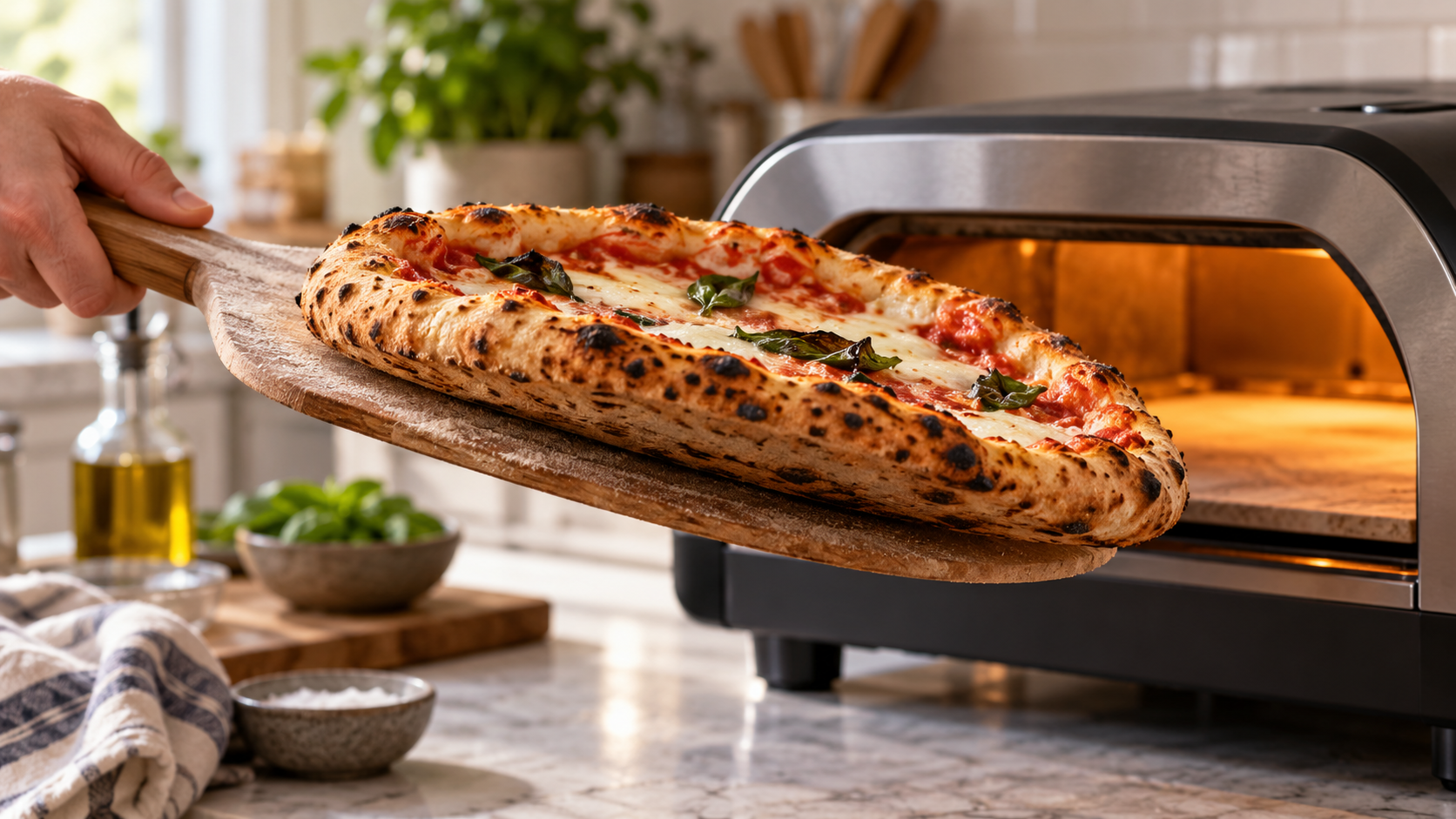
The Volt 2 gets very hot on a kitchen counter. That sounds like the whole story until you lift the first pizza and look at its base.
Verdict: The Ooni Volt 2 is a strong fit if you want very hot pizza indoors and can leave a large oven on the counter. Its controls give you ways to change how the top and base cook. Check the stone when it arrives, and plan to learn what works with your dough.
Watch the base on your first bake
T3’s reviewer got a black, hard base on his first try with the Neapolitan preset. He read that setting as 430C and felt it put too much heat under his thin dough. Tom’s Guide liked the default pizza setting, and Engadget got good Neapolitan results from a preset. One burnt base does not show that every oven has a fault. It does give you a useful first check.
If your base burns, try a lower custom heat setting before changing everything about your launch. T3 got a better pie at 400C with Crisping Intensity at 5 and Boost, though he also used different dough on that try. Change one thing at a time so you know what helped.
The controls take some learning
The older Volt 12 had a dial for shifting heat between the top and bottom. The Volt 2 uses 3 pizza presets, 2 saved custom settings, Crisping Intensity, and Boost. Crisping Intensity sends more heat toward the top. That gives you choices, but there is no simple dial for the heat under the stone. The Breville Pizzaiolo and Piezano offer separate top and bottom controls if you want that direct choice.
Make room for it, even after cooking
Ooni rates the oven up to 850F and says it can heat up in 20 minutes. Reviewers saw about 20 to 25 minutes, depending on the setting. The stone loses heat when you bake, and Engadget found Boost useful for warming it between pies. The outside gets hot too. Give it clear space and time to cool before moving it.
Check the stone when you open the box
Food Network’s test oven arrived with a cracked stone. Some Amazon buyers also report stone cracks. These reports do not tell us how often it happens, but they make a quick check worthwhile. Look at the stone and window as soon as the oven arrives. Ooni says its 1-year warranty grows to 3 years if you register within 60 days.
Check the counter space
The Volt 2 is about 10 inches tall, 17 inches wide, 21 inches deep, and 39 pounds. Its stone is 13 inches across and fits a 12 inch pizza, so a group eats one pie at a time. Ooni’s manual also calls for open space around the oven. Measure the counter with that space included, not just the oven’s size.
Who should skip the Volt 2
Pass if you have outdoor space and want larger pizzas. Ooni’s Karu 2 Pro and Koda 2 Pro both have bigger stones and higher heat. They also ask you to cook outside and manage fuel.
If pizza is an occasional dinner, try a steel in the oven you own first. It may be enough, and it does not claim permanent counter space.
Before buying, mark out the oven and its clear space on your counter. If that footprint works, the next question is whether you want to learn its settings for the pizza you make.
Cited sources
- Ooni, Volt 2 product details
- T3 review, Tom’s Guide review, and Engadget review
- Food Network, indoor pizza oven tests
More field guides
More Precision Chef guides
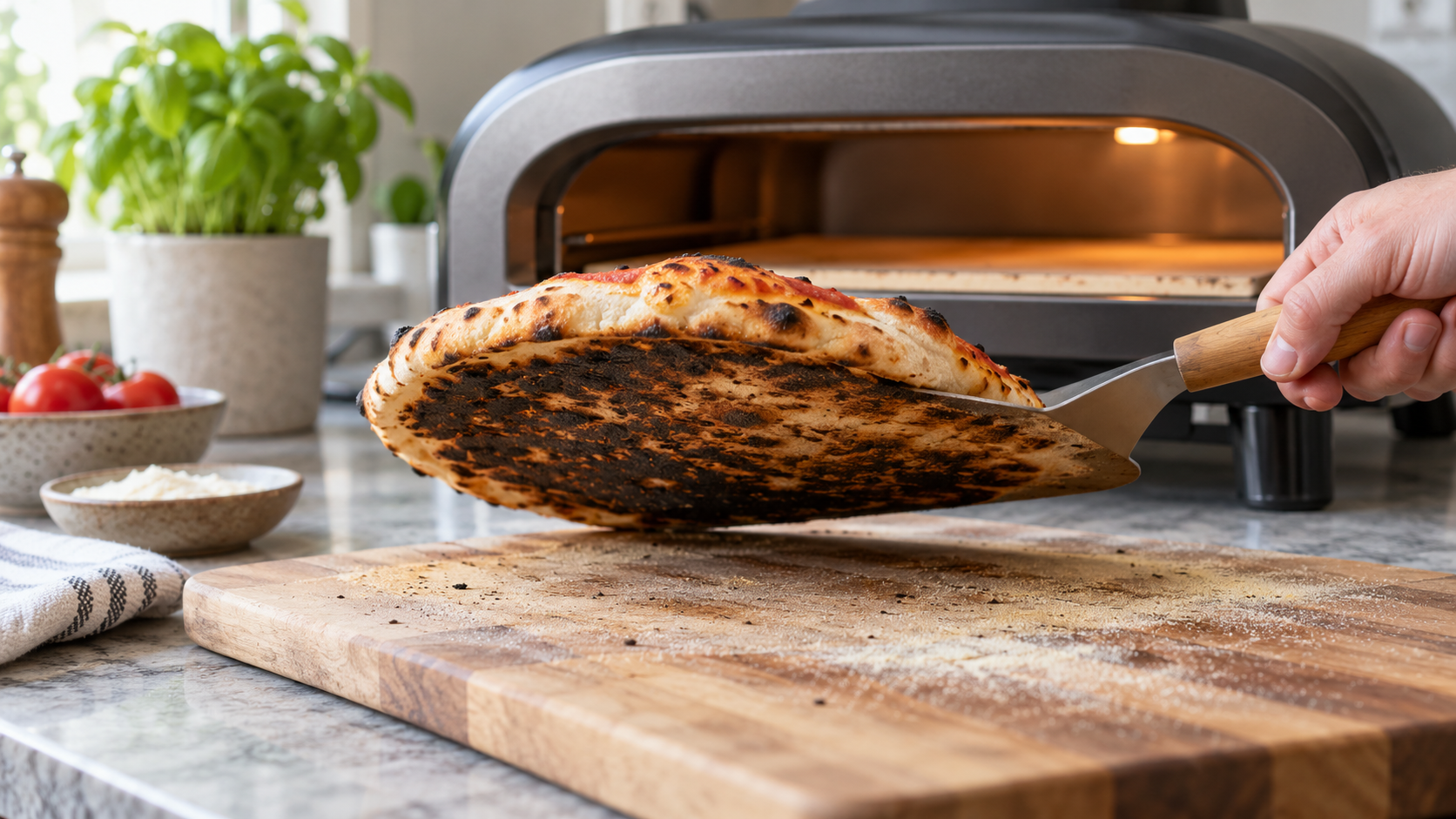
Ooni Volt 2 Burning Pizza Bases? Try This Setting First
If your Volt 2 pizza burns underneath, try a lower custom setting. Learn what one reviewer changed, what else may matter, and when to keep the default.
Read the field guide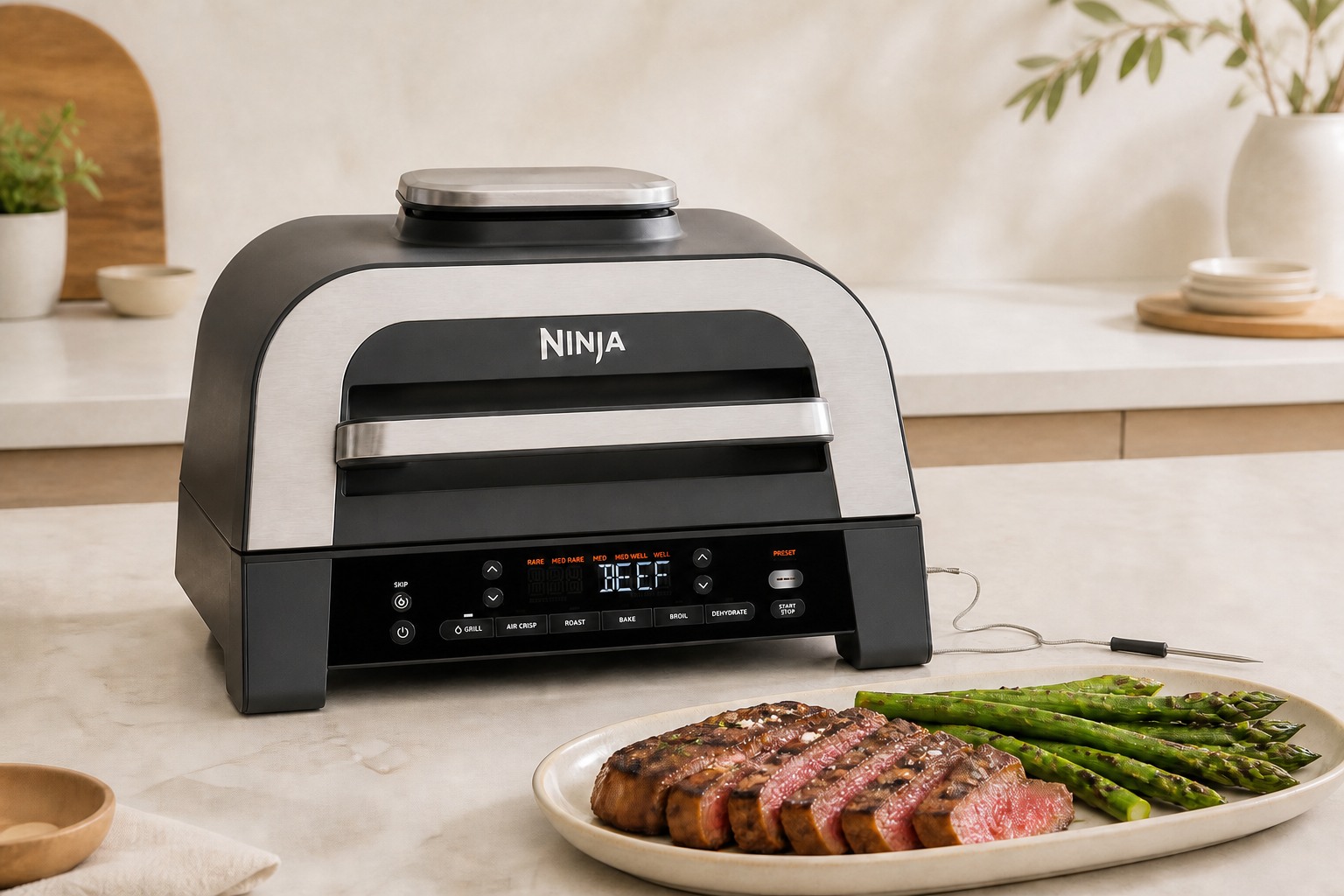
Ninja Foodi Smart XL DG551 Review: Buy It for the Probe
The DG551 suits regular indoor protein cooking. Its thermometer helps track doneness, but the large body, shared heat, and grease cleanup matter.
Read the field guide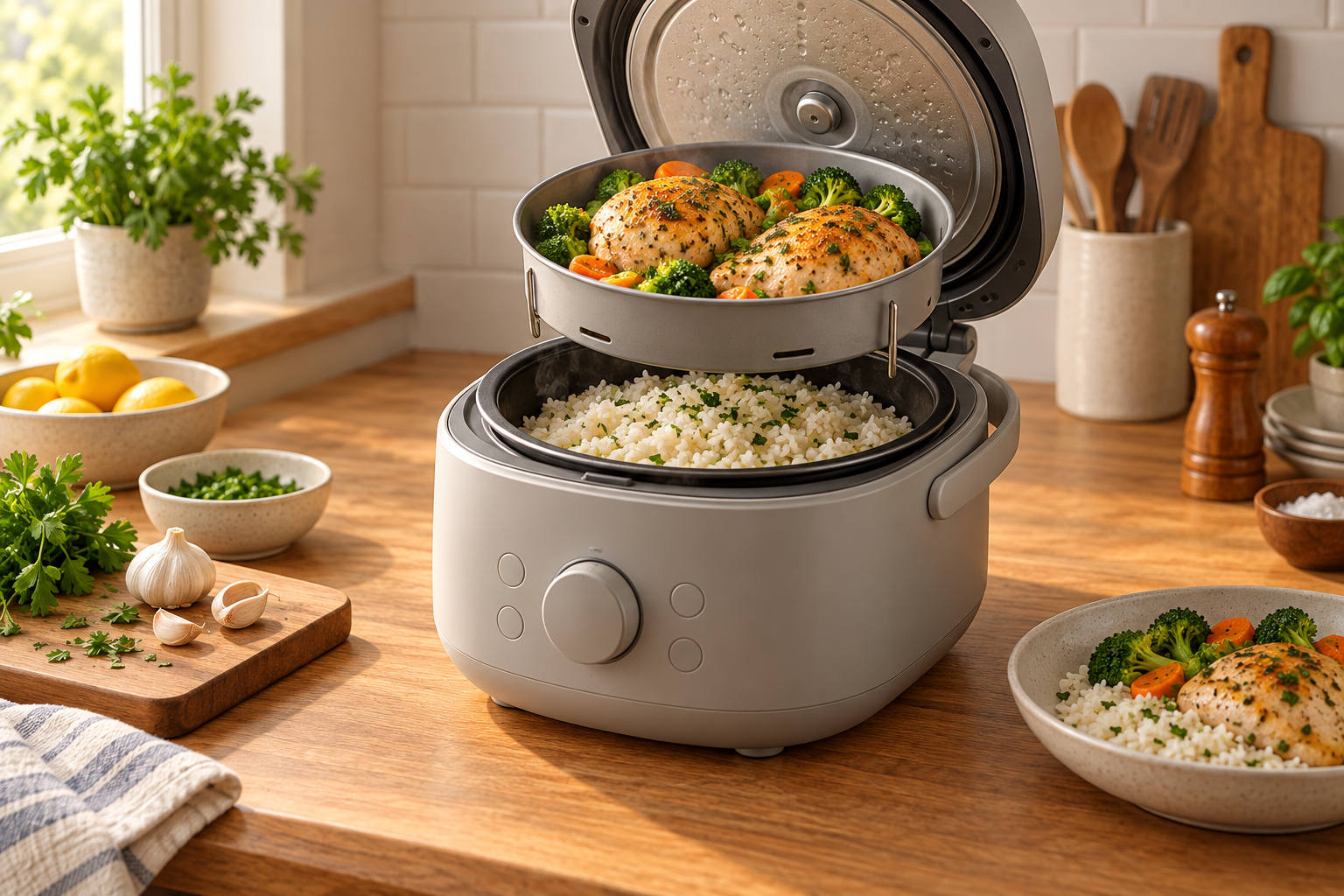
Ninja Speedi SF301 Review: Keep Yours or Buy One?
Own a Ninja Speedi SF301 or thinking of buying one? Check stock, tray capacity, real meal times and cleanup before deciding.
Read the field guide