The Creator's Kitchen: Gear That Cooks Well and Films Well
Inevitable Ape is reader-supported. When you buy through links on our site, we may earn a commission at no extra cost to you, and it never changes what we recommend. See our Affiliate Disclosure and Editorial Policy.
You lit the room. You fixed the angle. You plated something you were proud of, hit record, and then watched it back and the food looked like it came off a hospital tray. The gear cooked fine. It just did not read on camera.
Here is the verdict up front. In a kitchen you film in, every hero piece has to pass two tests instead of one. It has to cook the way you need, and it has to hold up under continuous light without turning into a mirror or a jet engine. If you only cook for yourself and never point a lens at the counter, ignore all of this and buy whatever performs. The moment a camera enters the room, the rules change.
Finish is the upgrade nobody mentions
The first time we shot a pour-over on a glossy black kettle, the ring light landed as a white bar straight across the body, and every single take had it. No amount of repositioning killed it. We swapped to a matte kettle and the problem disappeared in one shot.
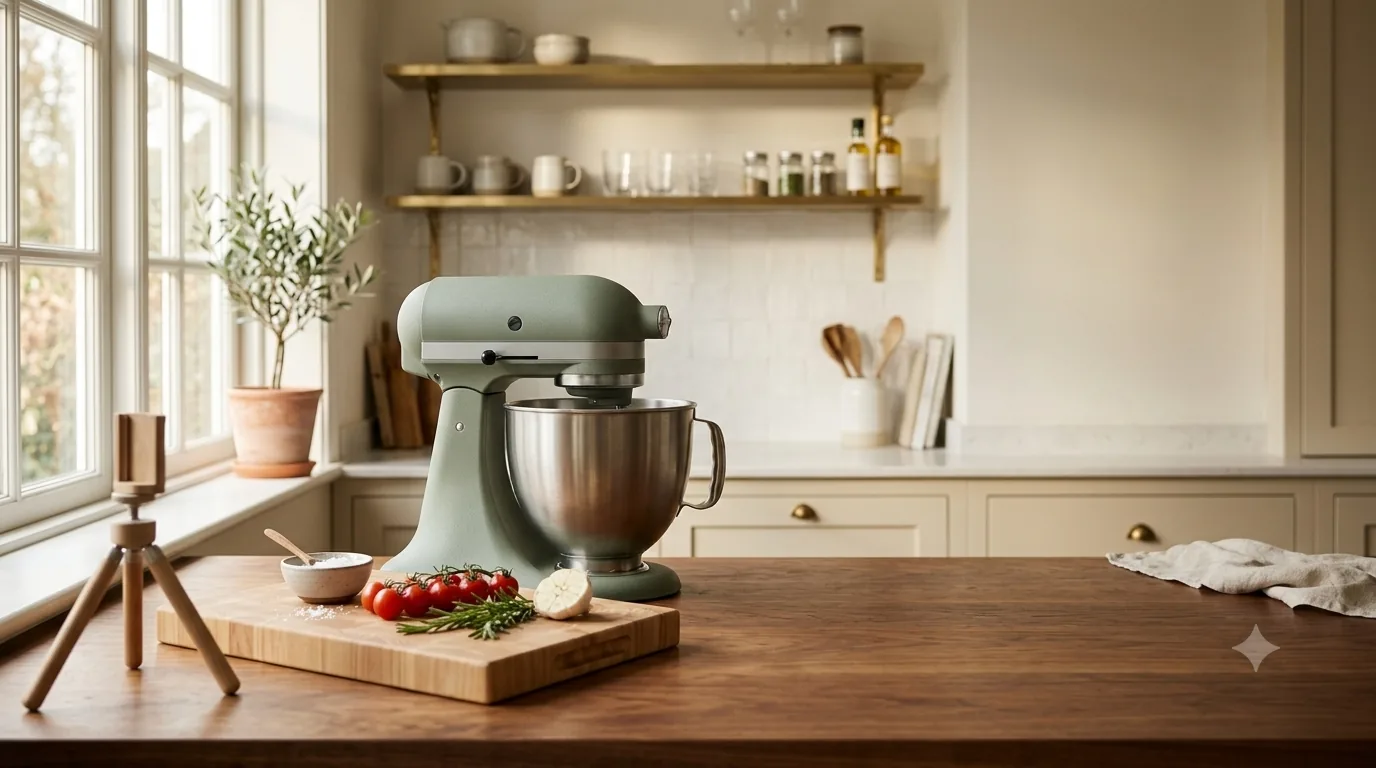
That is the whole lesson. Glossy stainless and piano-black plastic mirror your lights back at the lens. Matte, brushed, and powder-coated surfaces absorb that light and photograph clean. When two products are otherwise equal, buy the matte one. Warm neutral tones like cream, sage, and natural wood sit behind food better than a bright primary color that fights whatever is on the plate.
The appliances that live on camera
Your hero appliances sit in frame permanently, so they carry the most weight.
- Stand mixer. The workhorse of food content. A metal body in a muted color reads premium. A glossy plastic one reads like a wedding gift from 2009.
- Espresso machine. Clean stainless lines beat a busy panel of buttons and screens on camera.
- Blender. If you talk over it, buy the quiet motor. Your microphone is listening even when you forget it is.
Pans and surfaces
Nonstick that actually releases saves takes. Nothing burns thirty minutes of shooting faster than an egg welding itself to the pan mid-sentence. A lighter cooking surface also bounces fill light up onto the food, which flatters it. Cast iron and carbon steel photograph beautifully once seasoned, but a patchy, half-seasoned skillet looks worse on camera than it does in person, so keep them maintained if they are going to be seen.
The tools in your foreground
Small tools fill the front of the frame, so treat them as set dressing. Wood, natural fiber, and matte metal look deliberate. Bright plastic looks like a dollar-store run in 4K. One good end-grain cutting board becomes the surface you film most, so that is the place to spend.
Sound is half the footage
Great footage with grating audio still loses the viewer. Screaming blenders, rattling lids, and a roaring extractor fan bury your voice under noise you cannot edit out cleanly. Where you have a choice, the quieter appliance and the soft-close drawer read as quality both in the room and through the mic.
What we skip
Single-use gadgets that photograph as clutter. Anything in a loud brand color you will regret in every future video. Plastic that scratches inside a month and shows every mark on camera. In a kitchen that gets filmed, fewer and quieter pieces win.
How we pick
Cooking performance comes first, always. Then we screen for how a piece behaves on camera: its finish under light, its noise, and whether it fits a set that already looks like one room instead of five brands. We take no payment for a good review. See our Editorial & Review Policy for the full method.
Start with the surface you shoot most, your primary pan, and your one hero appliance. Get those three reading clean and the rest of the kitchen follows.