
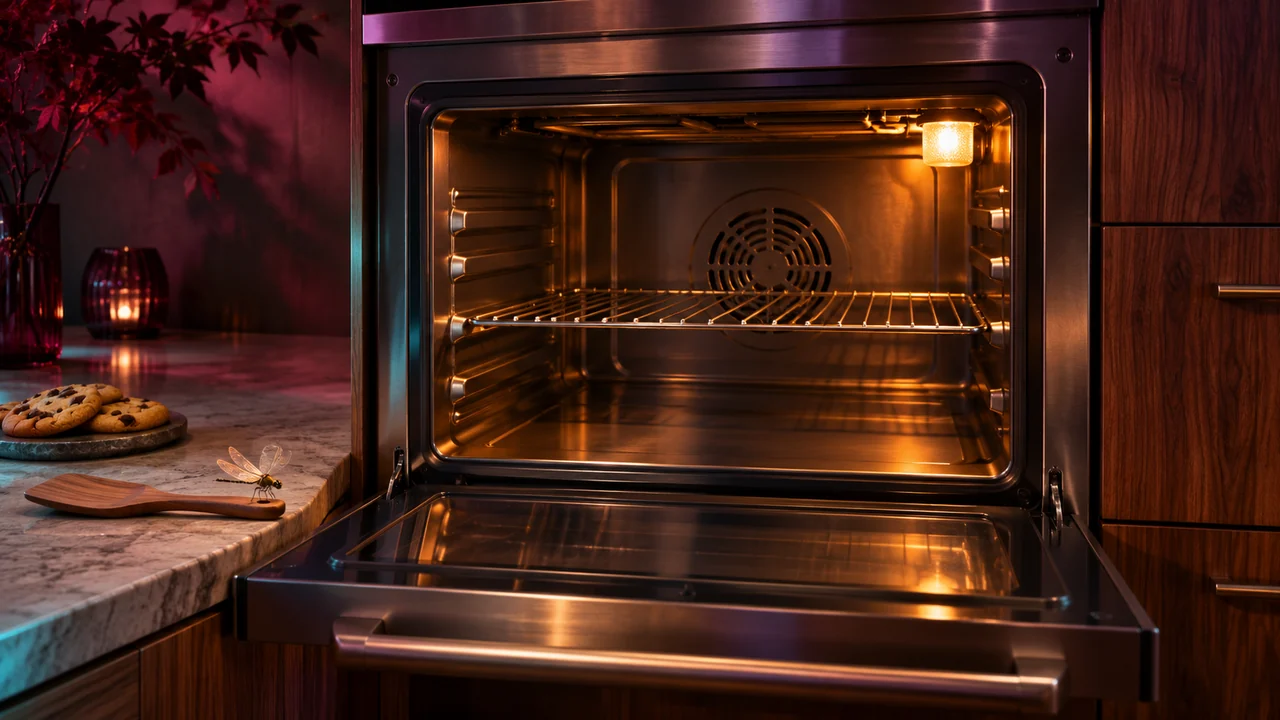
The recipe said 3 hours. At hour 4 the thighs still weren’t there, the sides were going cold, and someone was asking whether the oven was even on.
The verdict: give an empty oven time to heat through, then check whether it consistently runs hot or cold. A single reading can catch the oven at the top or bottom of its normal cycle. Start with a center-rack thermometer such as the CDN ProAccurate DOT2. Run the check before you have a turkey waiting on the counter.
Why the dial and the oven disagree
Ovens don’t hold one temperature. They heat past the setting, shut off, cool below it and start again. America’s Test Kitchen says even a well-calibrated oven can swing about 25 degrees either side of the dial, as long as the average lands where you set it.
If the oven consistently averages high or low, that’s an offset worth investigating. One glance right after the preheat beep tells you very little.
The test
America’s Test Kitchen’s method is simple:
- With the oven cold and empty, put an oven-rated thermometer in the middle of the center rack. Clip an air probe there or hang an analog dial according to its instructions.
- Set the oven to 350 °F, or use the setting that’s been giving you trouble. Keep the door shut.
- From the time you switch it on, allow about 30 minutes for digital or at least 40 minutes for analog, following America’s Test Kitchen’s method.
- If your thermometer reports an average, use that reading. If it reports live readings only, watch long enough to see a full rise and fall. The midpoint between the high and low is a rough check. With an analog dial, repeat the check before acting on a borderline result.
Reading the result
America’s Test Kitchen distinguishes a live digital reading, which can swing about 25 °F around the setpoint, from an analog or averaged reading, which should land within about 10 °F. Whirlpool’s general guide suggests calibration at a 15 °F difference. If the difference repeats, use the instructions and limits for your own oven.
Fixing it without a technician
Look up your model number and find the calibration or temperature offset instructions. Adjust in small steps and repeat the same test after each change. If the temperature varies wildly or the offset falls outside your model’s adjustment range, use the manufacturer’s service guidance.
If your oven has no offset setting and the difference is modest and repeatable, write it down and compensate at that setting. Keep checking the food itself. For a turkey, use a food thermometer to judge doneness.
While you’re at it
Your turkey thermometer deserves the same suspicion. Drop it in a glass of ice water and it should read 32 °F. Our guide to why turkeys come out dry after brining walks through probe placement and when to pull the bird.
Who should skip this
Already cook with an oven thermometer living on the rack? You’ve been running this test all along. Recipes come out on time and cookies brown when they should? Your oven is probably honest enough.
Everyone else: run the test tonight or this weekend, not Thursday morning with a bird on the counter.
Cited sources
- America’s Test Kitchen / Cook’s Country, oven thermometer review and testing method: https://www.americastestkitchen.com/cookscountry/equipment_reviews/1638-oven-thermometers
- Whirlpool, “How to calibrate an oven”: https://www.whirlpool.com/blog/kitchen/how-to-calibrate-an-oven.html
- GE Appliances, model-specific calibration example: https://products.geappliances.com/appliance/gea-support-search-content?contentId=19108
- Whirlpool Product Help, calibration changes and service guidance: https://producthelp.whirlpool.com/Cooking/Wall_Ovens_and_Ranges/Product_Info/Oven_Product_Assistance/How_to_Calibrate_the_Oven
- University of Georgia CAES, thermometer calibration: https://fieldreport.caes.uga.edu/news/calibrate-food-thermometer-before-xmas-cooking/
More field guides
More Precision Chef guides
Dry Turkey After Brining? Check the Thermometer, the Probe and the Pull Point First
Brined your turkey and it still came out dry? Check your thermometer, probe placement, oven and pull point before you blame the brine.
Read the field guide
Foamy Espresso Shot? What the Foam Is Telling You
A foamy espresso can taste great. If yours tastes sharp, use the roast date, basket type and shot flow to work out what to change first.
Read the field guide
Buy the Grinder Before You Upgrade the Espresso Machine
Before replacing your espresso machine, check the basket, beans and grinder. Two electric burr grinders, their trade-offs, and when to keep what you have.
Read the field guide