
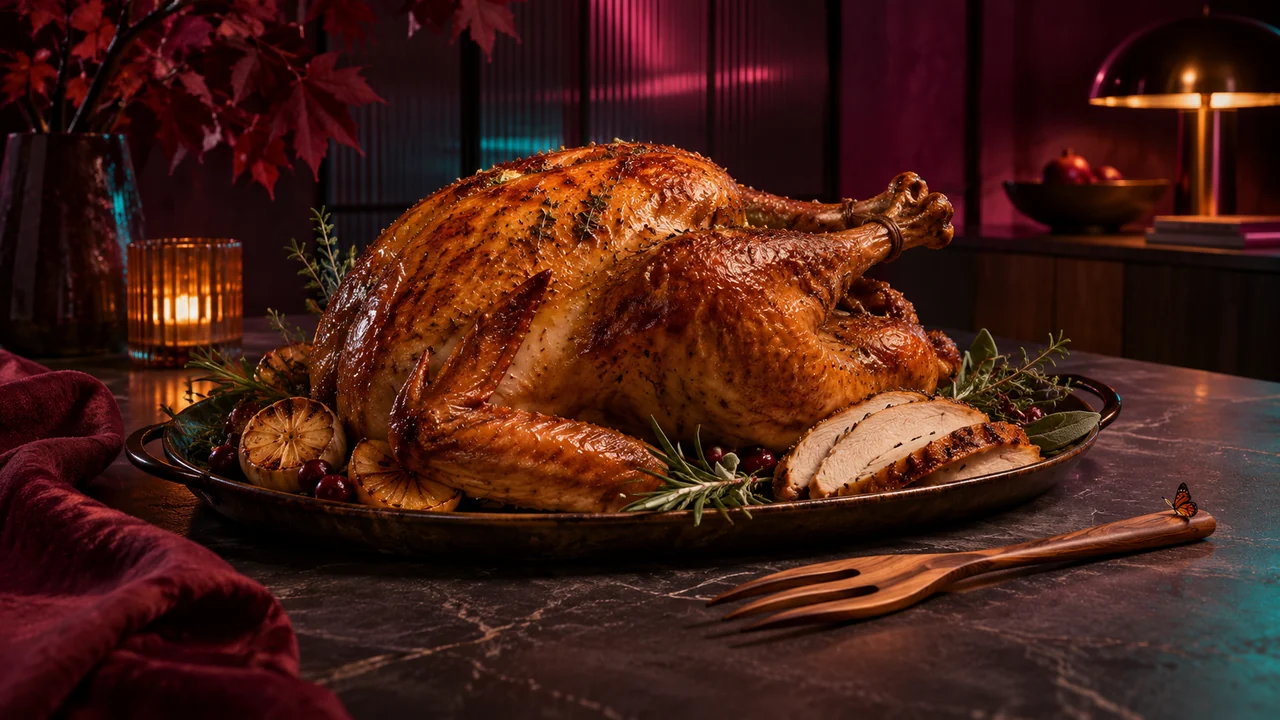
You cleared a fridge shelf, brined the bird and still carved breast meat with the texture of a paperback.
The verdict: check for overcooking before you change the brine. A thermometer that reads low, a probe in the wrong spot or an oven that runs hot can all leave you with a dry breast. Start with the thermometer you already own.
I’ve cooked turkey in a sous vide bath, on a smoker, on a grill and in an oven. Wet brined, dry brined, spatchcocked, trussed: they’ve all turned out well. I run a leave-in probe and double-check it with a second thermometer. I have also never once checked whether either of them is accurate. Two thermometers agreeing can just mean they’re wrong together. So this list is for me too.
Read the label before you fill the bucket
Look for “self-basting,” “kosher” or an added salt solution on the label. America’s Test Kitchen advises against salting kosher and self-basting birds again. If the meat tastes salty as well as dry, check the label before you change the recipe.
Give your thermometer an ice bath
Stir together ice and water to make a slush. Put the probe tip in the middle, clear of the sides and bottom, and wait for the reading to settle. University of Georgia Extension gives 32 °F as the reference.
If it reads low, the screen can say “almost there” after the breast is done. Check your manual for the accuracy tolerance and calibration instructions. Use another thermometer if you can’t correct an out-of-spec reading.
3 spots, none of them bone
The USDA says to check the innermost part of the thigh, the innermost part of the wing and the thickest part of the breast. Keep the tip off the bone and off the pan. A leave-in probe tells you when to start checking. Use an instant-read to confirm all 3 places, and let the lowest reading decide when the bird is done.
Keep the door shut more than you open it
I baste. I just don’t expect it to fix a dry breast. America’s Test Kitchen says basting doesn’t moisten the meat, and every time you open the door, some heat escapes. If you like basting, make the visit quick. I also like butter under the skin. Cowboy butter gets my vote.
Suspect the oven itself? Here’s how to check whether your oven is lying.
When to pull the turkey
Use the recipe’s timing to plan when to start checking. USDA guidance is to cook until the breast, thigh and wing each reach at least 165 °F before taking the bird out. If you stuffed the turkey, the center of the stuffing also needs to reach 165 °F. Rest the bird for 20 minutes before carving.
ThermoWorks notes that turkey can keep heating while it rests. Check for 165 °F before you take it out. America’s Test Kitchen takes thighs to 170 to 175 °F. Spatchcocking, which I like, helps the parts finish closer together, as Kenji López-Alt argues. Cooking the legs and wings separately works too.
Gear goes last
The ThermoWorks DOT can alert you with the door shut. The Thermapen ONE lets you check the breast, thigh and wing separately. Start with the instant-read you already own.
Who should skip this
If the bird comes out juicy, you’re done here. Go make the pumpkin pie. It’s not optional, and it starts with a fresh sugar pumpkin.
Put your thermometer in ice water tonight.
Cited sources
- ThermoWorks, probe placement and carryover (manufacturer): https://www.thermoworks.com/blogs/thermoblog/turkey-temps
- USDA FSIS, safe turkey temperature and probe placement: https://ask.fsis.usda.gov/article/What-is-the-internal-temperature-and-cooking-time-for-turkey
- UGA Extension: https://fieldreport.caes.uga.edu/news/calibrate-food-thermometer-before-xmas-cooking/
- America’s Test Kitchen: https://www.americastestkitchen.com/how_tos/5678-how-to-cook-a-turkey
- FoodSafety.gov, poultry roasting and stuffing temperatures: https://www.foodsafety.gov/food-safety-charts/meat-poultry-charts
- University of Georgia Extension, turkey roasting and resting: https://site.extension.uga.edu/madison/2024/11/a-complete-guide-to-safely-thawing-and-cooking-your-thanksgiving-turkey/
- NPR, Kenji López-Alt (2021): https://www.npr.org/sections/health-shots/2021/11/21/1057549040/this-thanksgiving-let-science-help-you-roast-a-tastier-turkey
More field guides
More Precision Chef guides
Is Your Oven Lying? How to Check It Before Thanksgiving
Check your oven temperature before Thanksgiving. Learn how long to wait, spot a persistent offset and decide whether to recalibrate.
Read the field guide
Foamy Espresso Shot? What the Foam Is Telling You
A foamy espresso can taste great. If yours tastes sharp, use the roast date, basket type and shot flow to work out what to change first.
Read the field guide
Buy the Grinder Before You Upgrade the Espresso Machine
Before replacing your espresso machine, check the basket, beans and grinder. Two electric burr grinders, their trade-offs, and when to keep what you have.
Read the field guide