
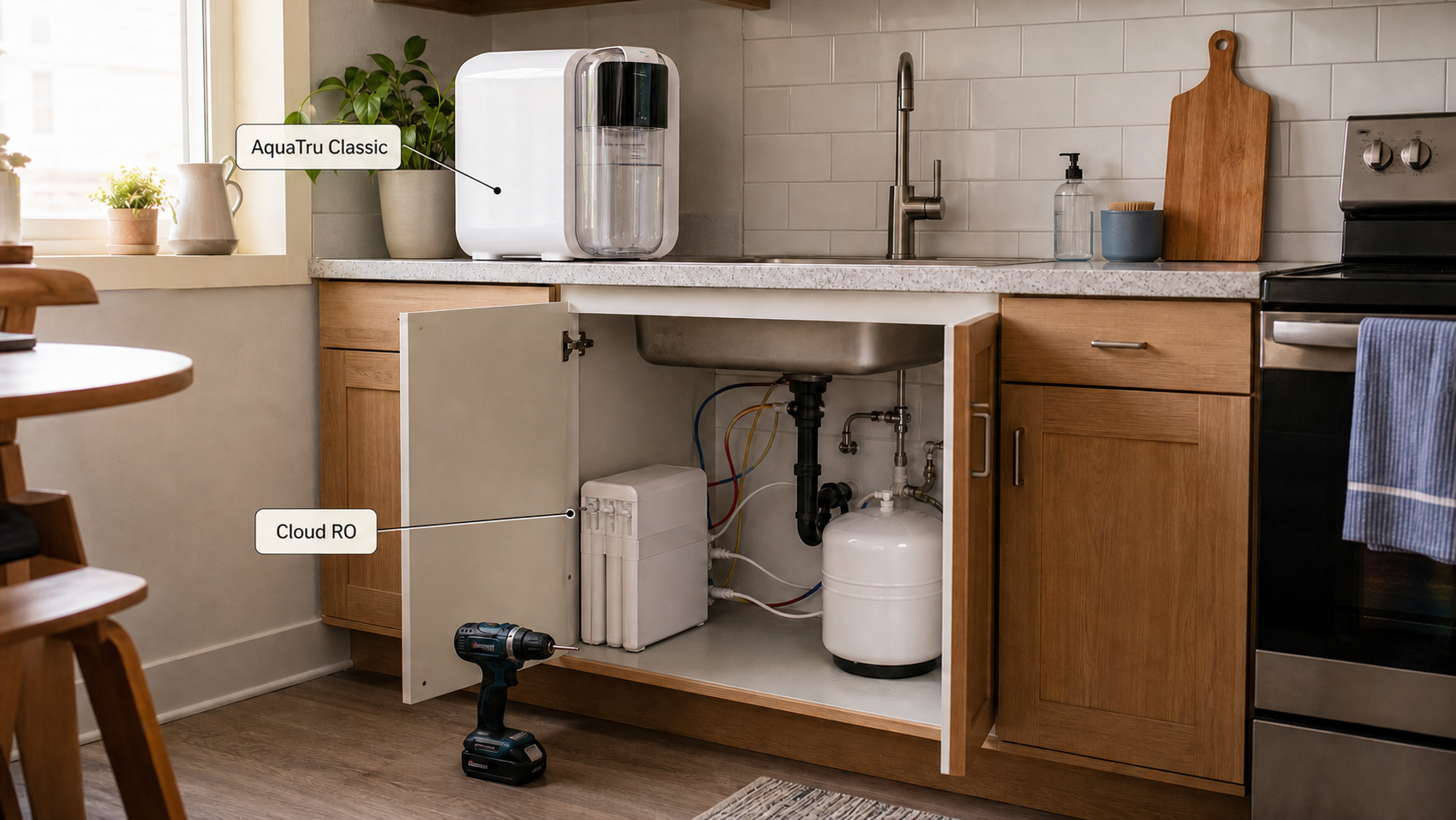
The under-sink photo looks tidy. The installation diagram has a drill in it. For a renter, that is where the buying decision should begin.
My verdict: start with a countertop RO system if you want filtration without connecting to the rental’s plumbing. AquaTru Classic is one documented option. For under-sink RO, get written approval for the exact faucet, supply connection and drain changes. Plan how you will put the kitchen back when you leave. No filter can promise what happens to your deposit.
The existing faucet hole solves one problem
Cloud’s installation FAQ says its dedicated drinking-water faucet can replace a soap dispenser, sprayer or existing plug. That can spare the sink or counter from a new hole. It also means giving up whatever currently occupies that opening.
Look underneath, too. Check that the faucet fits the opening and that you can reach its fixings. Send photos and measurements to the manufacturer or installer before buying. The top view tells only half the story.
Then check the drain. Cloud’s standard installation calls for a hole in the waste pipe. A saddle that clamps around the pipe still needs that hole for water to enter. Removing the clamp does not restore an untouched pipe.
Cloud says adapters are available, but does not name one that works for every rental. Ask Cloud and your installer for the exact part that fits your drain. Do not buy a random adapter and hope the plumbing agrees.
Put the installation plan in writing
Permission to “install a filter” is too vague. Describe the faucet opening, supply connection, drain changes and any mounting holes. Say who will do the work and how you will put things back when you leave. Get that plan approved in writing and file it where you can find it later should the need arise.
Photograph the original setup and keep any fixtures or fittings you remove. If putting the kitchen back will need a new pipe or a plumber, plan that now. Moving out is part of the purchase, even if the product page never mentions it.
A countertop system trades plumbing for a routine
AquaTru says the Classic requires no installation or plumbing connection. You fill its feed tank, plug it into an outlet and collect filtered water in its clean-water tank. Wastewater stays in the feed tank for you to discard according to the instructions.
The compromise is counter space and repeated filling, emptying and cleaning. Picture the unit beside your kettle and coffee gear. If the only available space is where you prepare dinner, the easier installation may still be an awkward daily fit.
AquaTru’s Classic performance sheet lists IAPMO certification to NSF/ANSI 42, 53, 58 and 401 for specific reduction claims. Look for the substance you want to reduce. Check the exact model and filter setup on the sheet; the brand name alone is not enough.
The sheet also sets a water-hardness limit unless the water is softened first. Check those water requirements before buying. No plumbing work does not mean the unit suits every water supply.
Who should skip under-sink RO?
Cloud runs without an electrical outlet, which removes one obstacle in a crowded cabinet. It still has a separate storage tank, needs plumbing connections and requires filter and battery maintenance. The benefit is filtered water from a separate tap, without repeatedly filling a countertop tank.
That can suit a longer stay with an approved installation. If permission is uncertain or you will move soon, postpone the under-sink purchase. Check the filter’s claims and picture the daily filling or maintenance. Choose the routine you will actually keep up.
Cited sources
- Cloud faucet, drain and rental installation FAQ
- Cloud system, tank and battery specifications
- AquaTru Classic installation and model information
- AquaTru Classic feed-tank and wastewater information
- AquaTru countertop performance data sheet
More field guides
More Precision Chef guides
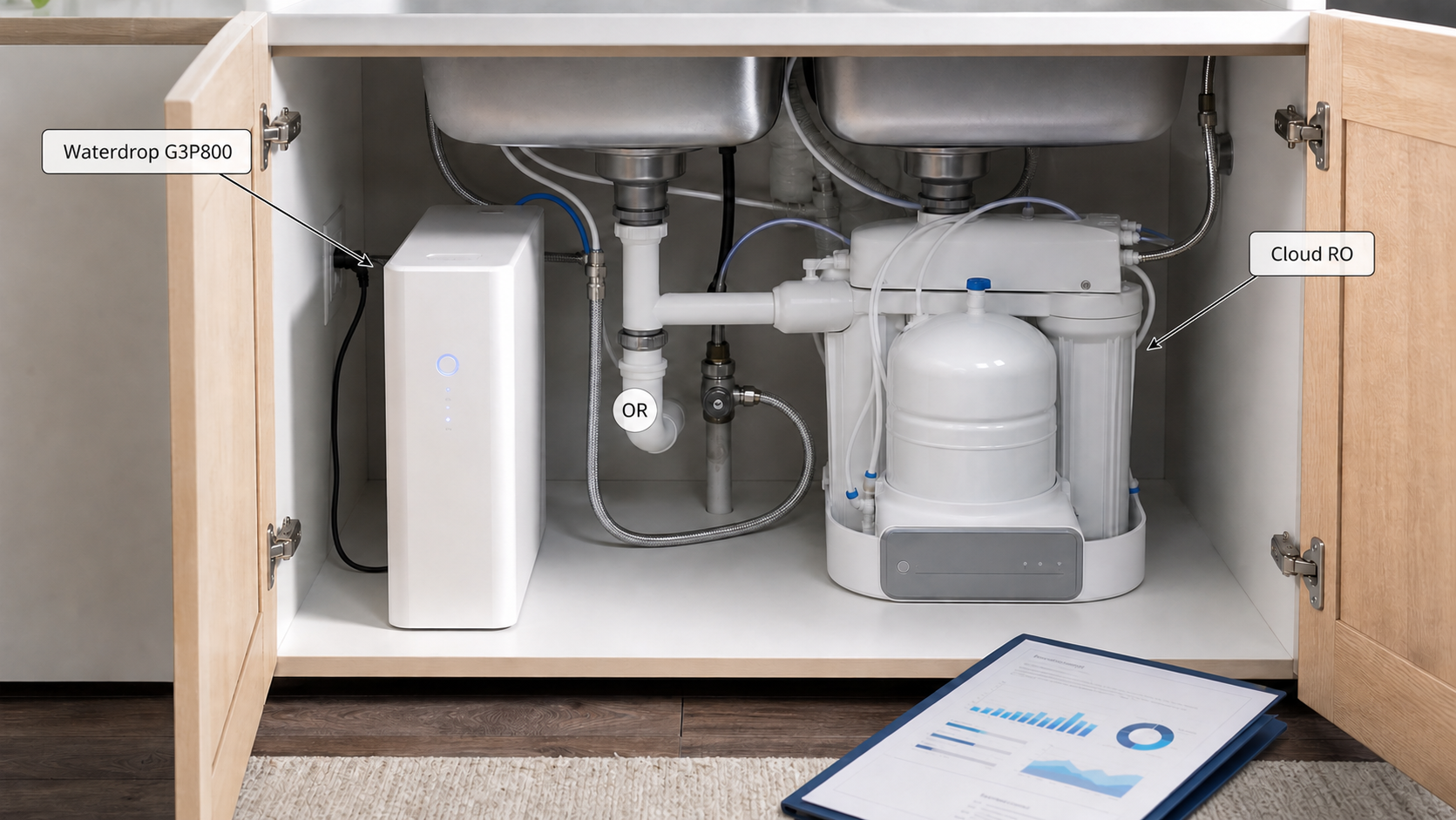
Cloud RO vs Waterdrop G3P800: Which Fits Your Kitchen?
Compare Cloud RO and Waterdrop G3P800 by the claims for your water, then check power, cabinet space and filter upkeep.
Read the field guide
Foamy Espresso Shot? What the Foam Is Telling You
A foamy espresso can taste great. If yours tastes sharp, use the roast date, basket type and shot flow to work out what to change first.
Read the field guide
Dry Turkey After Brining? Check the Thermometer, the Probe and the Pull Point First
Brined your turkey and it still came out dry? Check your thermometer, probe placement, oven and pull point before you blame the brine.
Read the field guide