
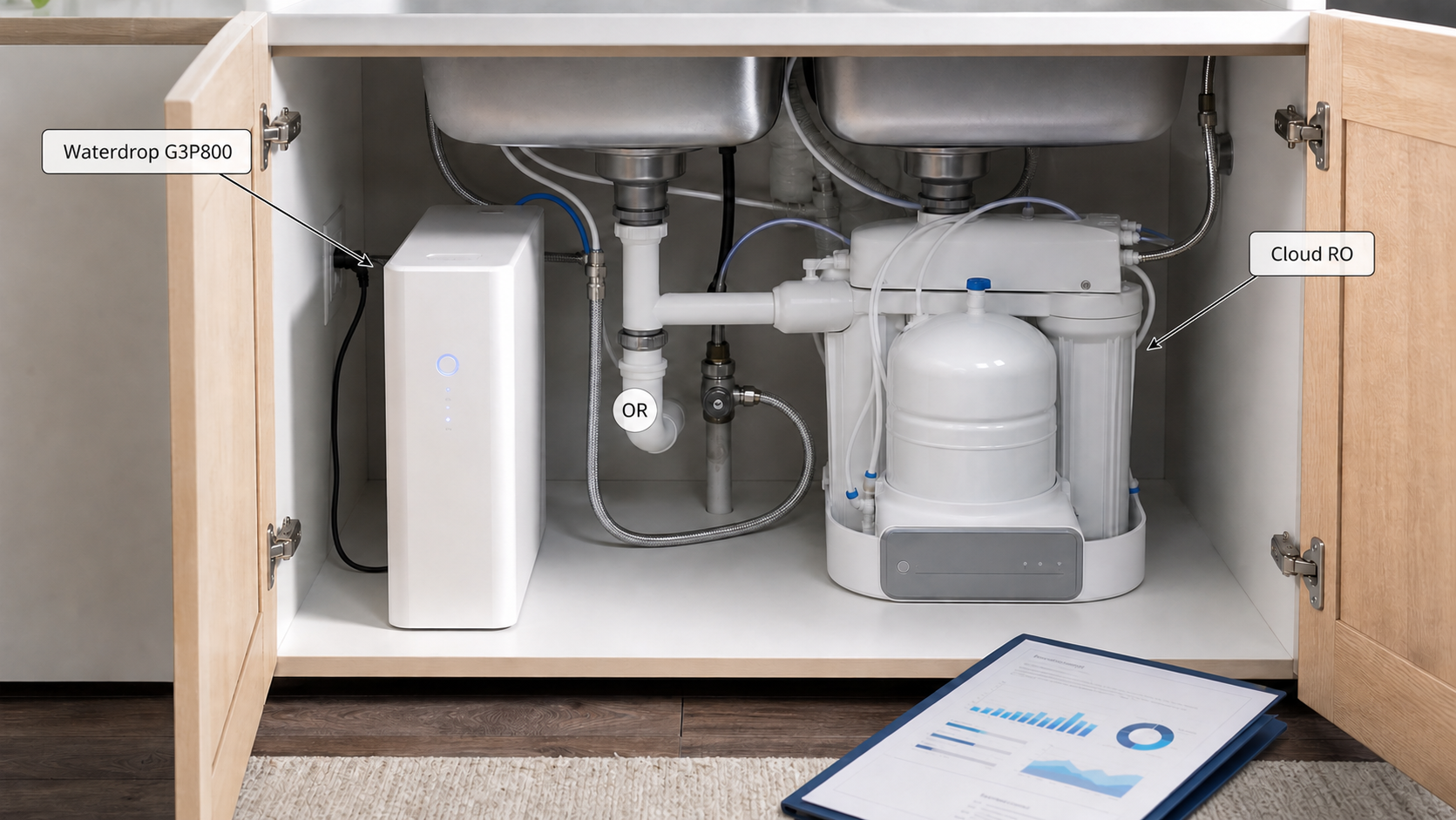
The kettle, coffee brewer and drinking glasses all draw from the same tap. If you are considering reverse osmosis, the useful question is what you need that water to do, and what your kitchen can accommodate.
My verdict: the Waterdrop G3P800 is my pick if its certified claims cover what you want to reduce and you have an outlet under the sink. Cloud RO suits a kitchen without that outlet, if you have room for its tank. Its NSF listing covers fewer claims. Added minerals and app reminders may be useful, but check the evidence for your water problem first.
Start with the claim that matters to you
Waterdrop’s documents say IAPMO certifies the G3P800 to NSF/ANSI 42, 53 and 58 for the claims in its performance sheet. These include reducing PFOA and PFOS, 2 PFAS chemicals. That does not mean it removes every PFAS chemical. NSF/ANSI 372 is separate: it concerns lead in the product’s materials, not lead removed from your water.
Cloud Version 1’s NSF listing covers TDS reduction under NSF/ANSI 58. TDS means total dissolved solids, a measure of dissolved material in the water. Cloud also publishes SGS lab tests for lead, PFOA, PFOS and other substances. Its sheet separates those tests from the NSF results.
A lab result and a certified claim are different kinds of evidence. Match the substance you want to reduce to the exact model’s claim. Read the claim, not just the standard number. A low TDS reading cannot tell you which contaminants remain.
Open the cabinet before choosing
The G3P800 needs electricity and produces water without a storage tank. Cloud uses a battery pack and stores filtered water in a separate tank. If there is no outlet, that may decide the choice before taste or app features matter.
Neither avoids plumbing. Both need a cold-water connection, a dedicated drinking-water faucet and a drain connection. Cloud’s standard installation includes drilling the drainpipe. An existing soap-dispenser or sprayer opening may solve the faucet question; it does not solve the drain question.
Measure the space around your plumbing. Leave enough room to reach and replace the filters without dismantling the whole cabinet.
Read the flow and waste figures carefully
Waterdrop advertises 800 gallons per day. That is a production rating, not 800 gallons waiting at the faucet. Cloud dispenses stored water while its RO filter refills the tank. Compare filtration capacity and available storage, rather than treating the rating as a promise about filling your kettle.
Waterdrop advertises 3 gallons of filtered water for each gallon sent to the drain. Cloud lists roughly 1 to 1. These are manufacturer figures, not measurements from your kitchen. Incoming water and flushing affect how much water you use.
Taste comes with another maintenance decision
Cloud includes a remineralizing stage. The standard G3P800 does not, although Waterdrop offers optional mineral stages. If you prefer minerals added back after RO, Cloud avoids an extra accessory decision. Added minerals do not guarantee better coffee. Check your brewer’s water guidance as well as your drinking-water preference.
Waterdrop publishes separate time and gallon limits for its cartridges. Cloud bases replacement recommendations on consumption and water quality. Both still require replacement filters and attention. Monitoring can remind you; it cannot do the job.
Who should skip these systems?
Pass on either under-sink system if you cannot approve the installation or maintain it. Before buying, write down what you want to reduce. Find that claim for the exact system, then open the cabinet and check the fit. Choose only after the evidence and installation both work for your kitchen.
Cited sources
- Waterdrop G3P800 specifications and certification statement
- Waterdrop G3P800 performance data sheet
- NSF listing for Cloud Version 1
- Cloud performance data sheet
- Cloud product specifications
- Cloud installation and maintenance FAQ
More field guides
More Precision Chef guides
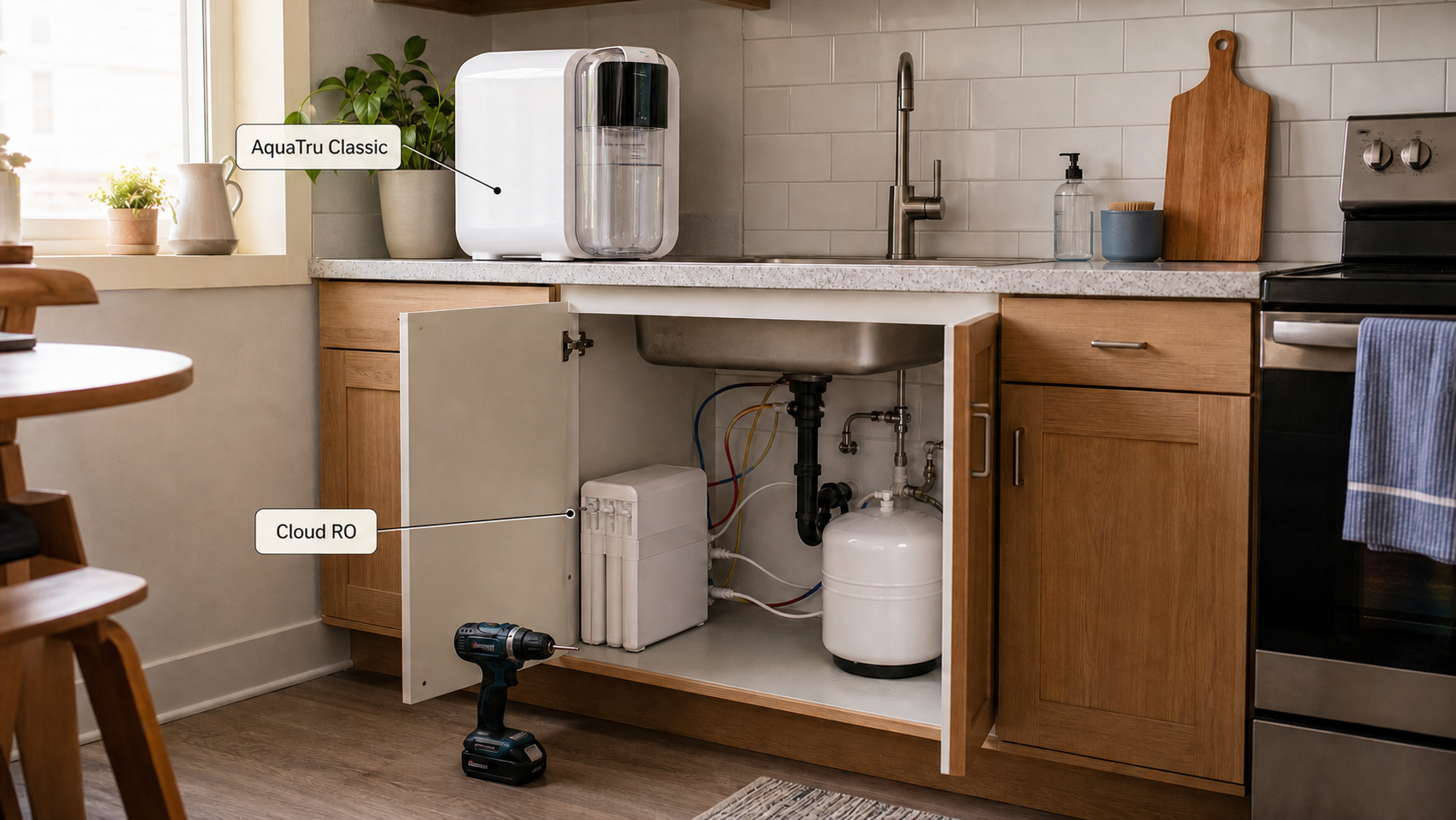
Under-Sink RO for Renters: Check the Install Before You Buy
Check faucet openings, drain changes, written permission and daily care before buying RO for a rental. A countertop system may fit better.
Read the field guide
Foamy Espresso Shot? What the Foam Is Telling You
A foamy espresso can taste great. If yours tastes sharp, use the roast date, basket type and shot flow to work out what to change first.
Read the field guide
Dry Turkey After Brining? Check the Thermometer, the Probe and the Pull Point First
Brined your turkey and it still came out dry? Check your thermometer, probe placement, oven and pull point before you blame the brine.
Read the field guide