
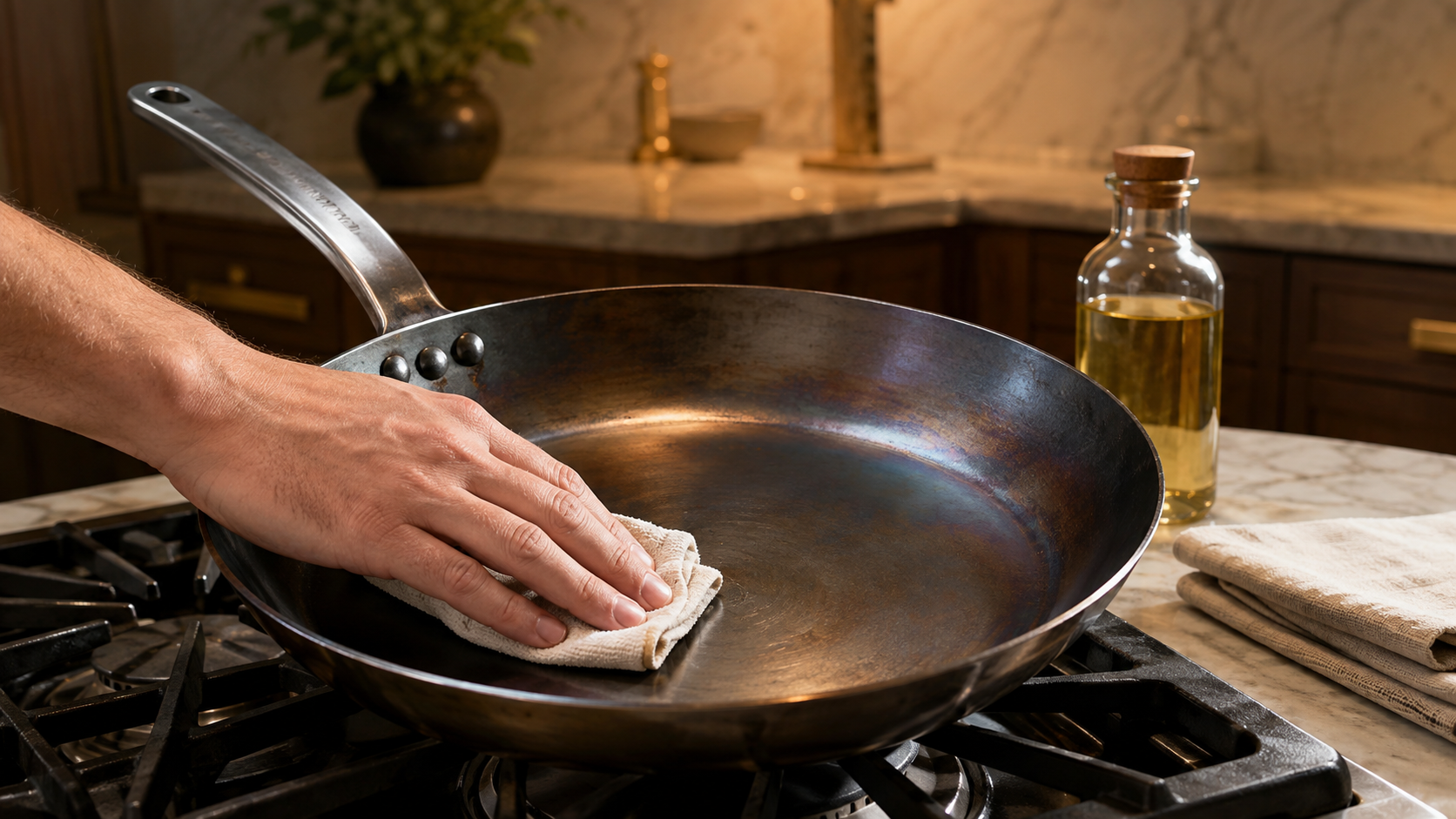
The first dark patch on a new carbon steel pan can feel like a mistake. Seasoning is a thin layer you build, cook on, and repair when needed, not a finish you have to get perfect on day one.
The verdict up front: wash off the factory protection, dry the pan completely, wipe on a nearly invisible film of neutral oil, and heat it the way your pan’s maker specifies. Then cook.
What seasoning is
Seasoning is oil that heat turns into a bonded layer. It helps protect bare steel from moisture and helps food release. Patchy brown, blue, and black color is normal, so judge the pan by how it cooks.
Check your pan before you heat it
Your maker’s instructions outrank any generic guide, this one included.
- de Buyer Mineral B Pro: its seasoning method bakes the pan upside down at 475°F for 1 hour, repeated 3 to 4 times. Its FAQ quotes a more cautious 10 minutes at 400°F for Mineral B fry pans. The classic Mineral B’s coated handle is for brief oven use only.
- Matfer Bourgeat: a cold oven brought to about 400°F for 45 minutes.
- Silicone sleeves come off before the oven. Wooden or coated handles usually mean stovetop seasoning only.
The best oil for seasoning carbon steel
Use an inexpensive neutral oil: canola, sunflower, vegetable, or grapeseed oil. Flaxseed is unnecessary. Misen says to avoid it, and while some owners report flaking, flax’s best-known advocate blames impure oil. Butter and unrefined oils make poor first coats.
A mediocre oil applied thin beats a good one left in puddles.
Method 1: season on the stovetop
The safe default when the oven rating is unclear.
- Remove the factory protection as directed. De Buyer calls for hot, soapy water to remove its beeswax before the first seasoning; another maker’s coating may need different preparation.
- Dry it completely over low heat.
- Spread about a teaspoon of oil in the warm pan, then buff with a clean towel until it looks dry.
- Raise the heat gradually toward medium-high, rotating so the walls heat too. Many makers expect smoke here, so run the vent fan.
- Cool and repeat. Makers range from 2 rounds (Mauviel) to 4 (de Buyer).
On induction, step up through low and medium rather than jumping to boost, or follow Misen’s advice and use the oven.
Method 2: season in the oven
Use this only when the whole pan is rated for the heat. Wipe a thin film over every bare surface, buff it dry, and bake upside down over a sheet pan at your maker’s time and temperature.
First cooks and daily care
Start with food that moves in a little oil: onions, potatoes, fried rice. Save eggs, sugary bacon, and long tomato or wine sauces for later.
Wash by hand, never soak it, and skip the dishwasher. Dry it right away, warm it on the burner, and wipe on a drop of oil, which most makers want after every wash. Soap is a maker-by-maker call: de Buyer, Matfer, and Misen say skip it, while OXO allows a drop of mild cleanser.
Who should skip the seasoning ritual
If your pan arrived pre-seasoned, skip the setup: wash, dry, cook. For heat-limited handles, stay on the stovetop.
If something goes wrong later, use the carbon steel pan rust and troubleshooting guide for rust, sticky spots, and flaking. Still shopping? Compare the best carbon steel pans before you choose a size.
Cited sources
- de Buyer: Mineral B Pro seasoning method
- de Buyer: Mineral B FAQ
- Matfer Bourgeat: black steel guide
- Misen: pre-seasoned carbon steel care
- Mauviel: carbon steel seasoning guide
- Sheryl Canter: flaxseed seasoning
More field guides
More Precision Chef guides
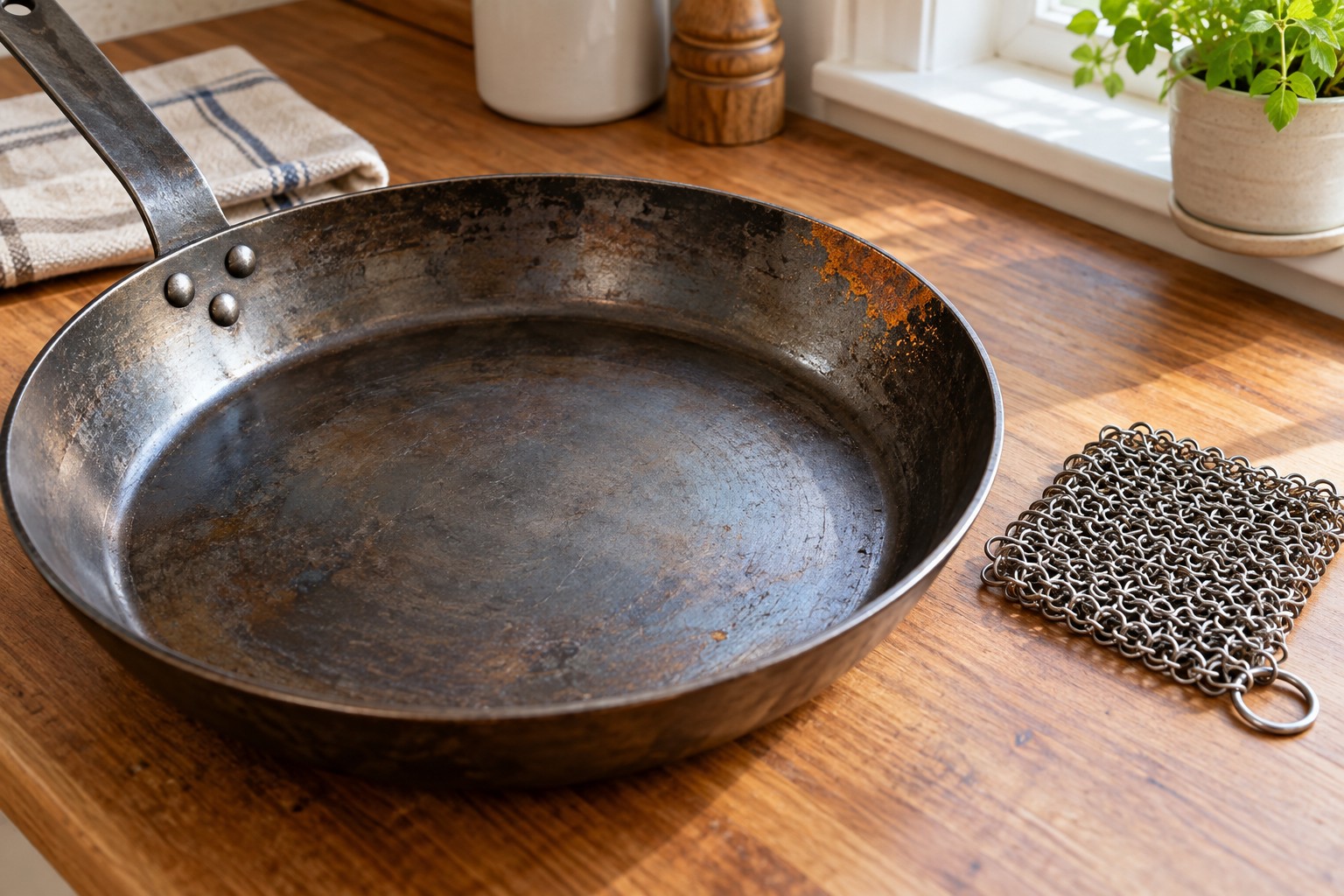
Carbon Steel Pan Rust: Why It Happens, How to Fix & Prevent (2026)
Why carbon steel pans rust, how to remove surface rust and when to re-season. Prevent repeat rust, then troubleshoot sticky or flaking seasoning.
Read the field guide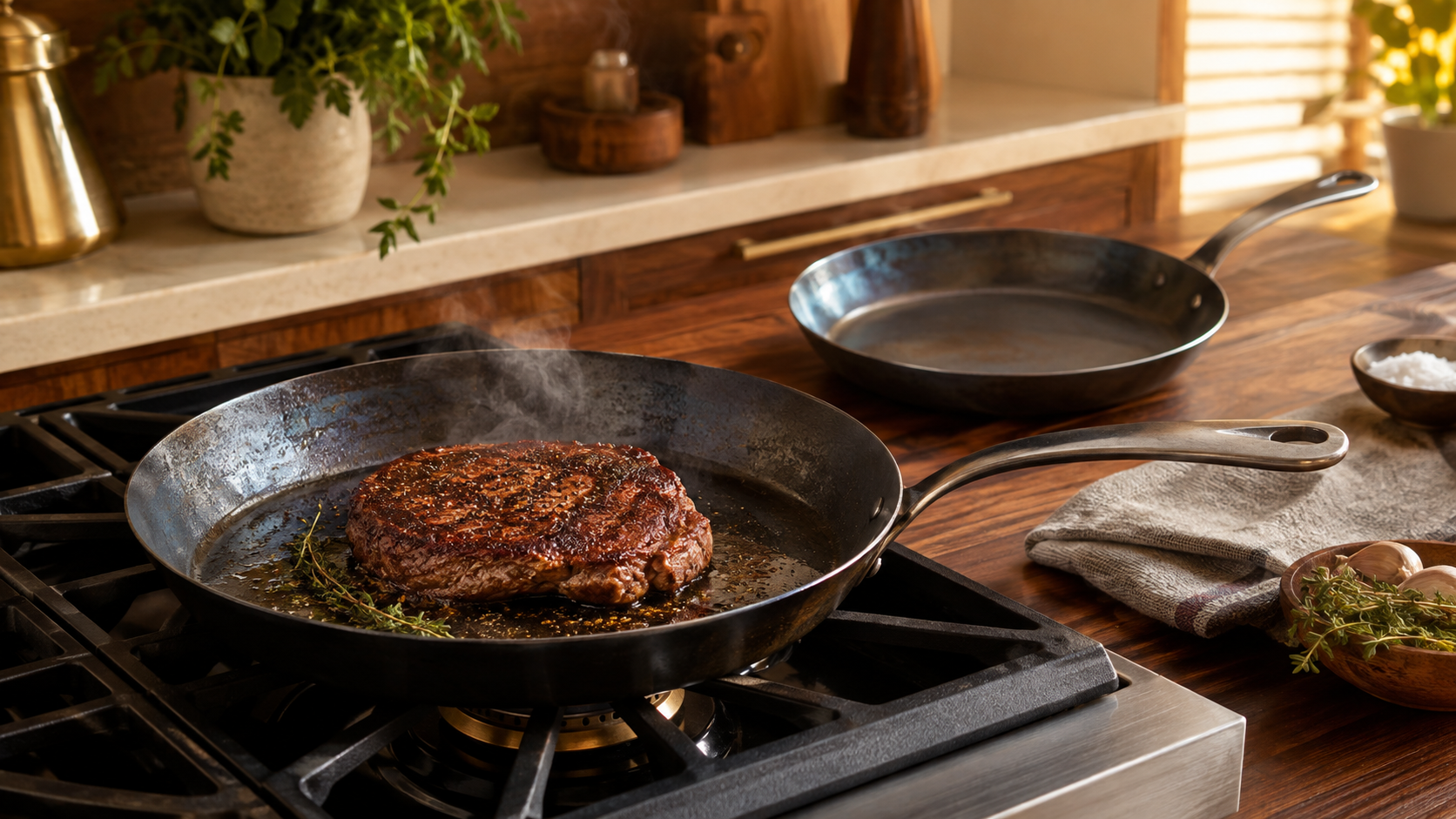
Best Carbon Steel Pans: Buy the Cooking Surface, Not the Rim
The best carbon steel pans for everyday cooking, the oven, lighter hands, and live fire, compared by flat cooking surface, weight, handle, and first-use effort.
Read the field guide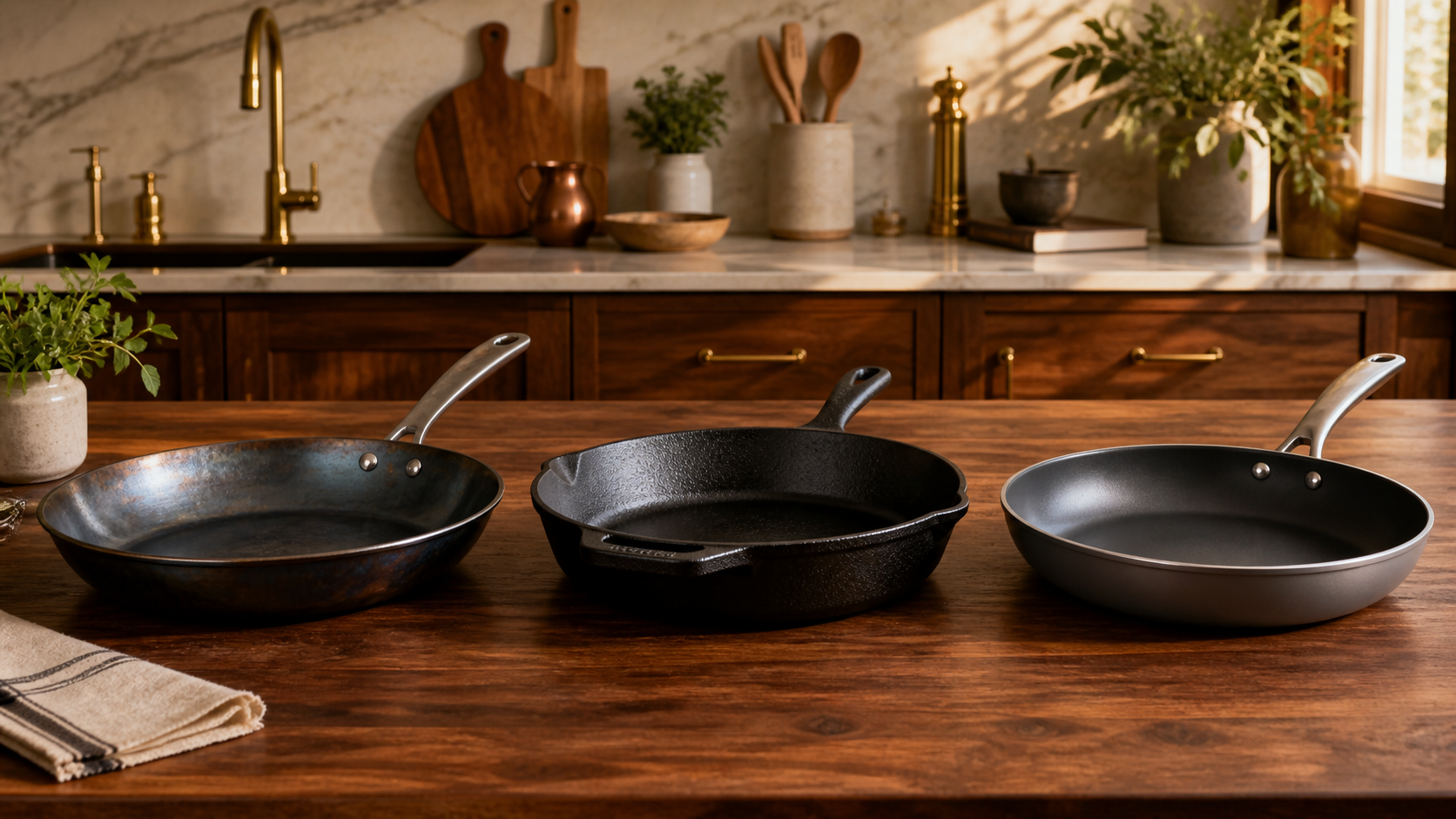
Carbon Steel vs Cast Iron vs Nonstick: Which Pan Is Best?
Compare carbon steel, cast iron, and nonstick by weight, heat, upkeep, and lifespan, then choose the pan that fits how you actually cook.
Read the field guide