
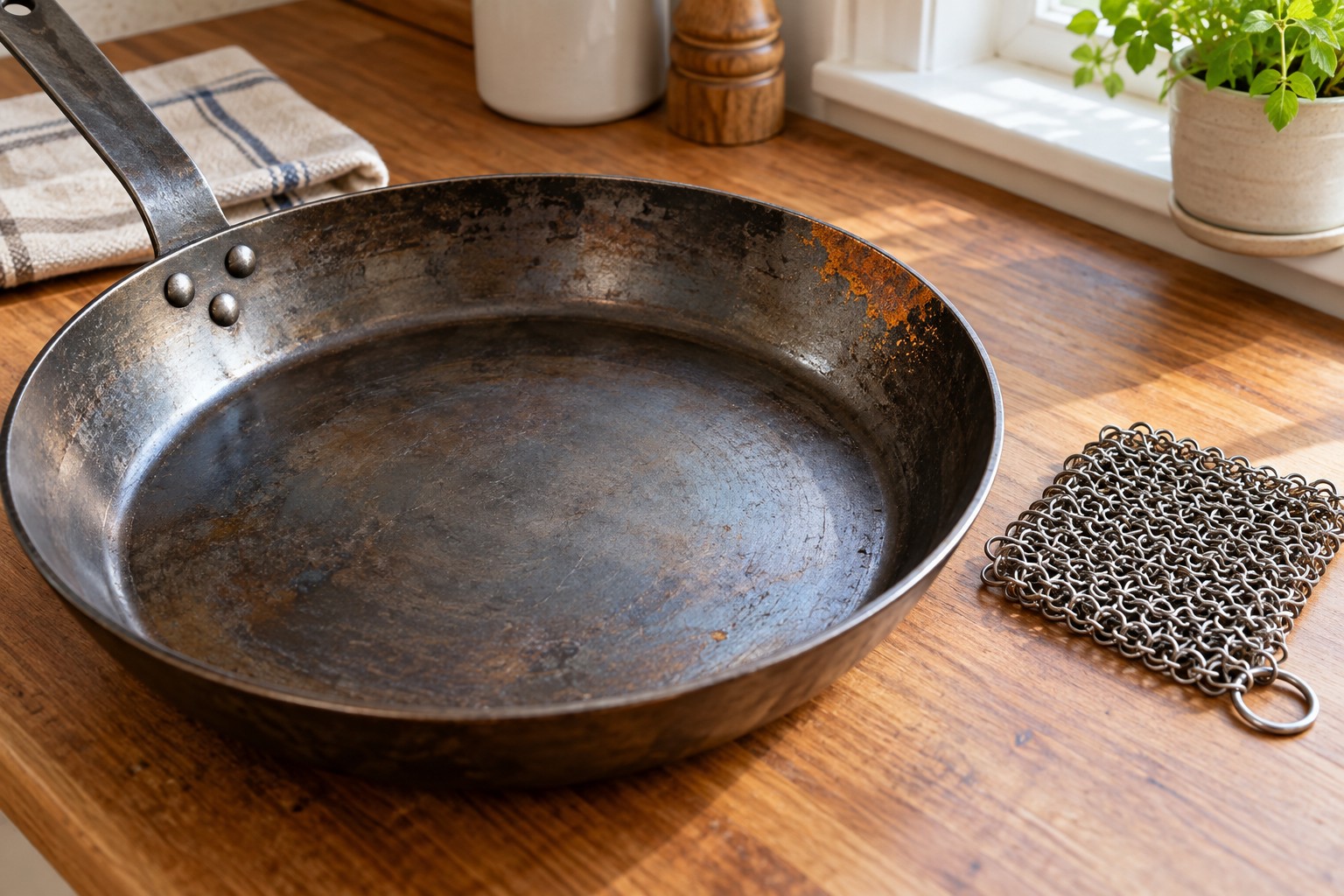
Orange dust on the rim means moisture reached the steel. It does not automatically mean the pan is ruined. Start with the rust itself, then check the seasoning that should protect the next clean surface.
The verdict up front: most carbon steel problems are local and fixable. Remove what failed, dry the steel completely, and rebuild with a thin oil coat. Strip the whole pan only when failure covers most of it.
Find the Fix
- Why carbon steel rusts
- How to remove rust
- How to prevent rust
- Other pan problems
- Frequently asked questions
Why Carbon Steel Rusts
De Buyer explains that moisture can oxidize the iron in carbon steel. Exposed patches, a pan put away wet or humid storage can all leave rust. Seasoning helps protect the surface; a mottled finish alone is not evidence that it failed.
How to fix rust
Scrub the rust with a chainmail scrubber or steel wool until clean steel shows, then wash, dry over low heat, and season the spot. Keep heavy abrasives for rust; de Buyer steers routine cleaning toward a non-abrasive brush.
For heavy rust, de Buyer suggests soaking in equal parts white vinegar and water, checking after 1 hour and stopping by 5 hours. Vinegar strips seasoning too, so plan to re-season the whole pan. Deep pitting calls for a closer look before you cook on it again.
How to Prevent Rust
After washing, remove all remaining moisture and use low heat to finish drying. Restore any bare patches using your maker’s seasoning method. Keep the pan in a dry place; seasoning reduces exposed iron but does not make damp storage harmless.
Carbon steel troubleshooting chart
| What you see | Likely cause | What to do |
|---|---|---|
| Patchy brown, blue, or black color | Normal seasoning development | Keep cooking |
| Orange dust or spots | Moisture reached bare steel | Scrub the rust, dry, re-season locally |
| Sticky or tacky film | Too much oil, not fully cured | Scrub smooth, then a far thinner coat |
| Black residue on a towel | Burned food or loose seasoning may be lifting | Clean until the towel comes away clean |
| Loose chips or peeling | Thick or poorly bonded layers | Remove everything loose, rebuild locally |
| Silver patch after tomato or wine | Acid stripped the seasoning | Wash, dry, re-season the patch |
| Pan rocks on a flat burner | Warping from fast or uneven heat | Contact the maker if new; preheat gradually |
Why food sticks
Seasoning gets blamed for problems caused by heat and moisture. Check these first: the pan was too cold, or too hot for eggs. The food was wet, moved too early, or went in with too little fat. Or the surface is rough with burned residue, which is not seasoning at all.
If those are handled and the same spot still grabs, add 1 thin coat or cook a few oily, forgiving meals.
How to fix a sticky or gummy surface
Gumminess is excess oil that never cured into a thin film. Do not cover it with another coat. Scrub it with hot water and an abrasive pad until smooth, then dry, apply far less oil, and heat again.
How to fix flaking seasoning
Color variation is normal. Loose edges and black chips on the towel are not. Remove everything loose, feathering the edge until what remains is firmly bonded, then rebuild the bare steel with 1 or 2 thin coats. Thick early coats are a common cause; scrub off what lifts before adding oil.
How to recover from acidic food
A tomato sauce can leave a silver patch and a metallic smell. Wash it, dry it, and add a thin stovetop coat. Save the next long acidic simmer for stainless or enamel.
Can I use soap on carbon steel?
It depends on your maker. De Buyer, Matfer, and Misen say skip it, while OXO allows a drop of mild cleanser. A plastic pan scraper and hot water handle most residue anyway.
Who should skip these fixes
A mottled pan that cooks well does not need repair, so you can leave it alone. A pan that arrived warped is a warranty question for the maker, not a sink project.
Need to rebuild from bare steel? The carbon steel seasoning guide walks through oils and maker-specific temperatures.
Frequently asked questions
Can carbon steel rust?
Yes. Carbon steel contains iron, and moisture can reach exposed steel. Seasoning helps protect it, but does not make it rustproof.
Does carbon steel rust easily?
A wet pan or humid storage can leave rust on exposed steel. Drying after washing and maintaining the seasoning matter more than an even black finish.
How do you remove rust from a carbon steel pan?
For surface rust, scrub until the rust is gone, rinse, dry completely and restore the seasoning where needed. Follow your pan maker’s instructions before using vinegar or other stripping methods.
Cited sources
- de Buyer: carbon steel rust removal
- de Buyer: Mineral B FAQ
- Matfer Bourgeat: black steel guide
- Misen: carbon steel cleaning
More field guides
More Precision Chef guides
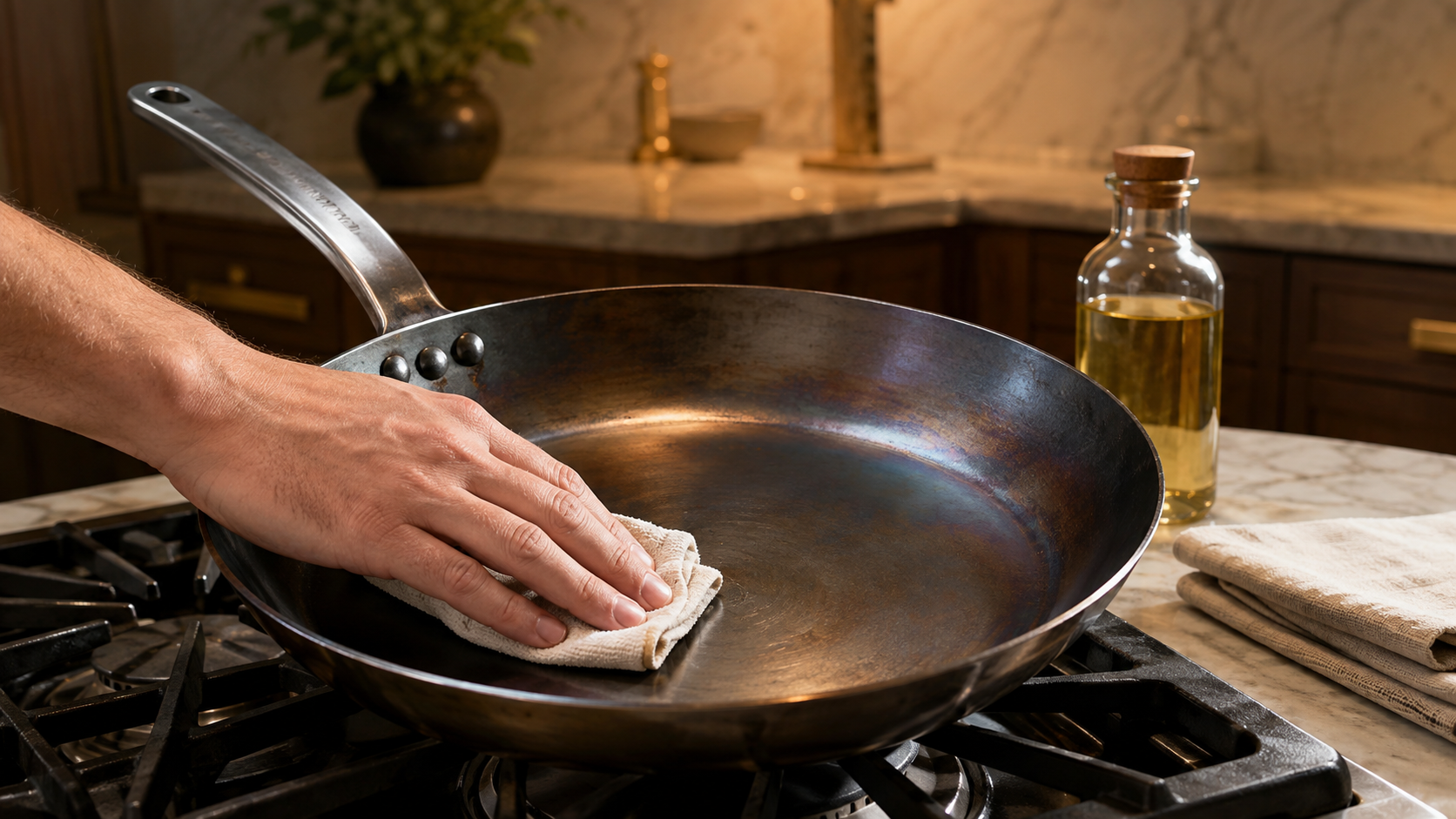
How to Season a Carbon Steel Pan (Your Pan's Maker Knows Best)
Season a carbon steel pan without sticky buildup: the right oil, stovetop and oven methods, maker-specific temperatures, and the daily care that keeps it slick.
Read the field guide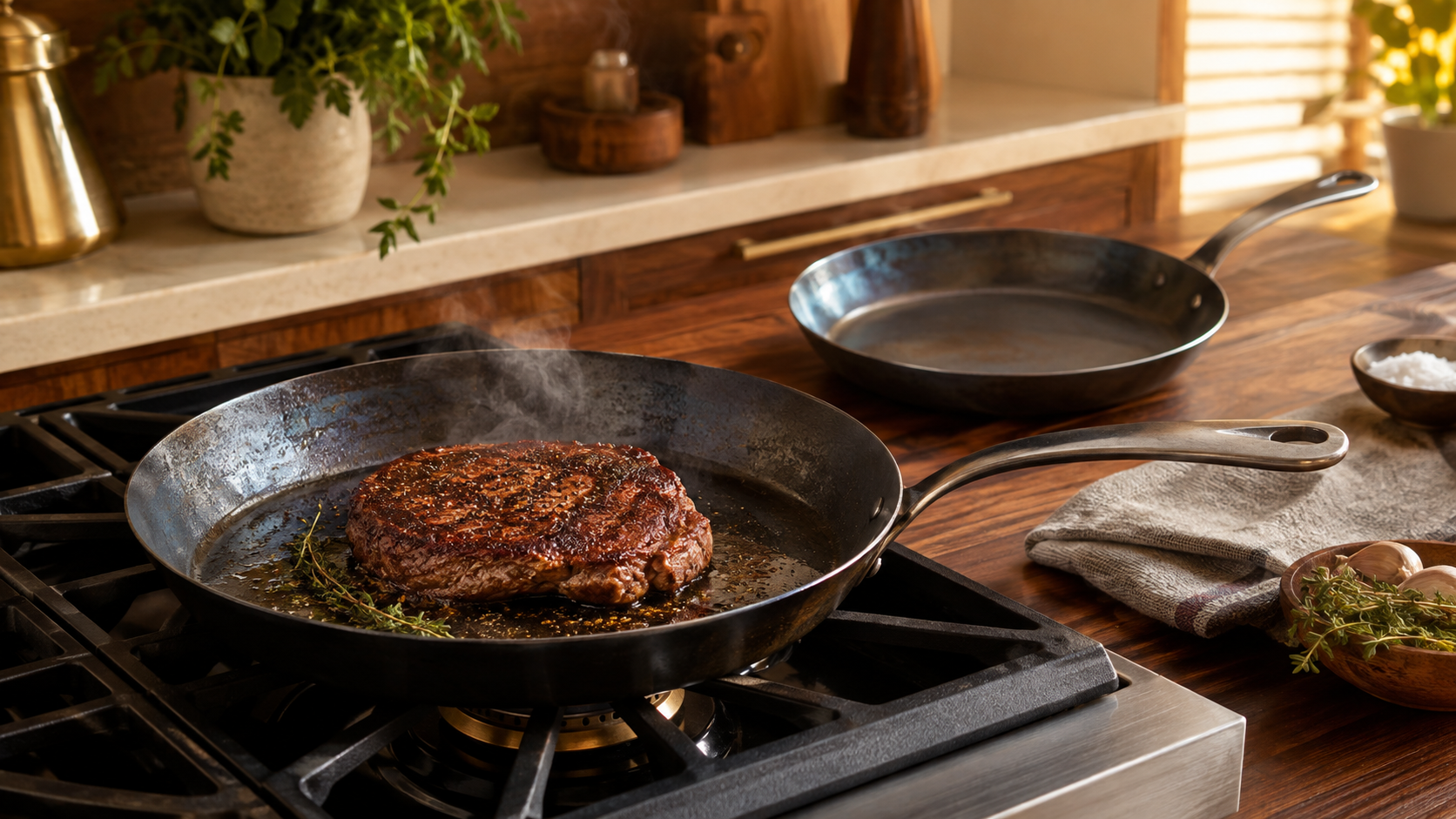
Best Carbon Steel Pans: Buy the Cooking Surface, Not the Rim
The best carbon steel pans for everyday cooking, the oven, lighter hands, and live fire, compared by flat cooking surface, weight, handle, and first-use effort.
Read the field guide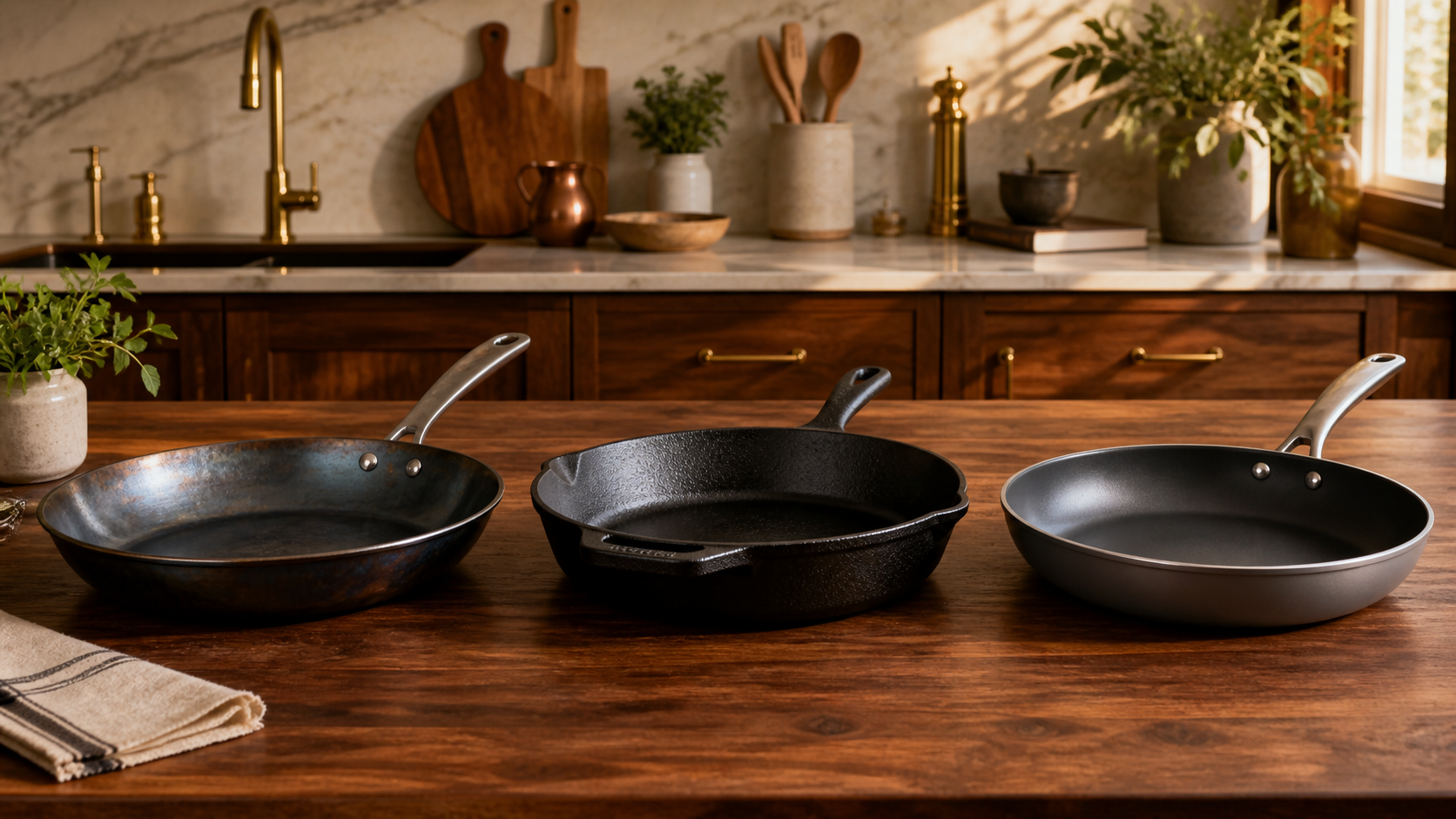
Carbon Steel vs Cast Iron vs Nonstick: Which Pan Is Best?
Compare carbon steel, cast iron, and nonstick by weight, heat, upkeep, and lifespan, then choose the pan that fits how you actually cook.
Read the field guide