
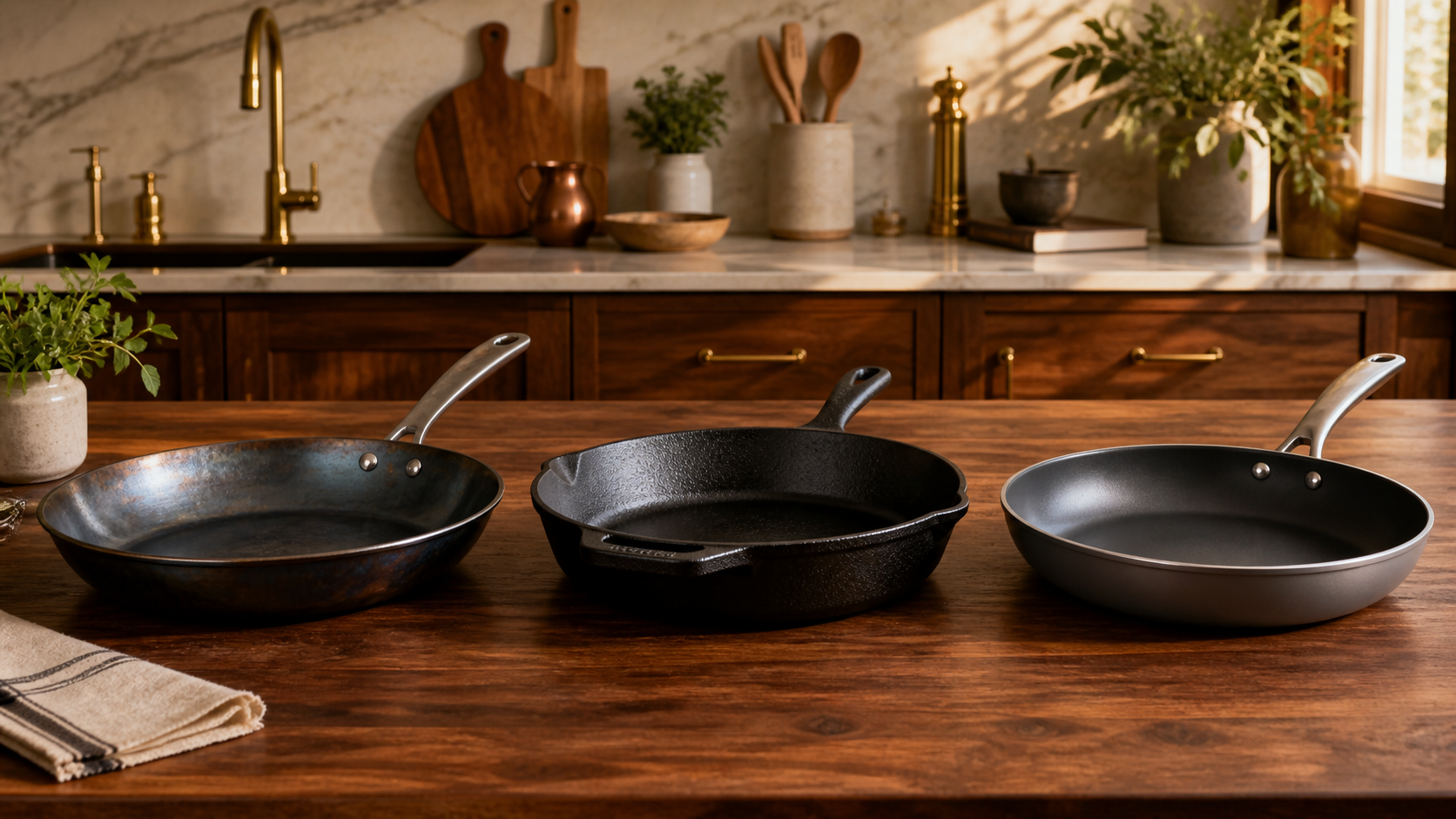
You can sear dinner in a pan you hate washing, or make eggs in a pan you would never trust with a hard sear. Which compromise follows you to the sink?
The verdict up front: choose carbon steel for a high-heat skillet you can lift and will dry after washing. Choose cast iron for retained heat and oven use. Choose coated nonstick for easy release, knowing its coating will wear. If eggs are the sticking point, pair a small nonstick pan with a bare-metal workhorse.
Carbon steel vs cast iron vs nonstick at a glance
| Factor | Carbon steel | Bare cast iron | Coated nonstick |
|---|---|---|---|
| Best at | Searing, sautéing, stir-frying | Hard searing, baking, frying | Eggs, fish, pancakes |
| Heat | Fast to heat and respond | Slow to heat, holds it well | Depends on the metal underneath |
| Handling | Often lighter, though thick pans add up | Often heavier | Varies by pan |
| Repairability | High: scrub and re-season | High: scrub and re-season | Low: replace when worn |
The real split is repairable versus replaceable. Rust and tired seasoning come off at the sink. A worn coating does not come back.
Carbon steel: the agile workhorse
Both materials are mostly iron. Carbon steel skillets commonly use thinner sheet, so they often weigh less and respond faster to burner changes. Size and thickness matter too.
It is not nonstick out of the box. Cooking builds seasoning until it handles eggs, though heat control still matters. It is my everyday pan.
Buy carbon steel if: you sear often, want to move the pan with one hand, and will dry it promptly. Our best carbon steel pans guide compares usable cooking surface, weight, and handles.
Cast iron: mass, stability, and value
The mass of a typical cast iron skillet takes longer to preheat and helps it hold heat when food lands. That helps with browning, frying, and baking. I reach for mine when something bakes in the pan.
Weight is the cost: a large skillet is awkward at the sink and slow to cool. Bare cast iron needs prompt drying too. Enamel protects the cooking surface from acidic food, though that surface can chip.
Buy cast iron if: you bake in a skillet or value retained heat over nimble handling.
Nonstick: convenience with an expiry date
Nonstick describes a surface, not one chemistry. The EPA identifies PFOA as one PFAS, so “PFOA-free” alone does not establish “PFAS-free.” Check the coating claim for the exact model if that matters to you.
Coated pans release eggs, crepes, and delicate fish more easily. You cannot re-season a worn coating. Follow the model’s heat and utensil limits.
Buy nonstick if: delicate food is frequent and fast cleanup matters most.
Who should skip bare metal
Bare metal is a poor match if damp cookware tends to sit in your sink overnight. Pass on heavy cast iron if lifting it is uncomfortable. For long tomato simmers, use stainless or enameled cookware and spare your seasoning.
Can soap touch carbon steel or cast iron?
For cast iron, Lodge says a little soap is fine. Carbon steel makers split: de Buyer, Matfer, and Misen say skip it, while OXO allows a drop.
Buy the pan whose care you will actually do. Our carbon steel seasoning guide covers first use, and the carbon steel pan problems guide covers rust and sticking.
Cited sources
- Lodge: cleaning and caring for cast iron
- de Buyer: carbon steel care
- Matfer Bourgeat: black steel guide
- Misen: pre-seasoned carbon steel care
- U.S. EPA: PFAS overview
More field guides
More Precision Chef guides
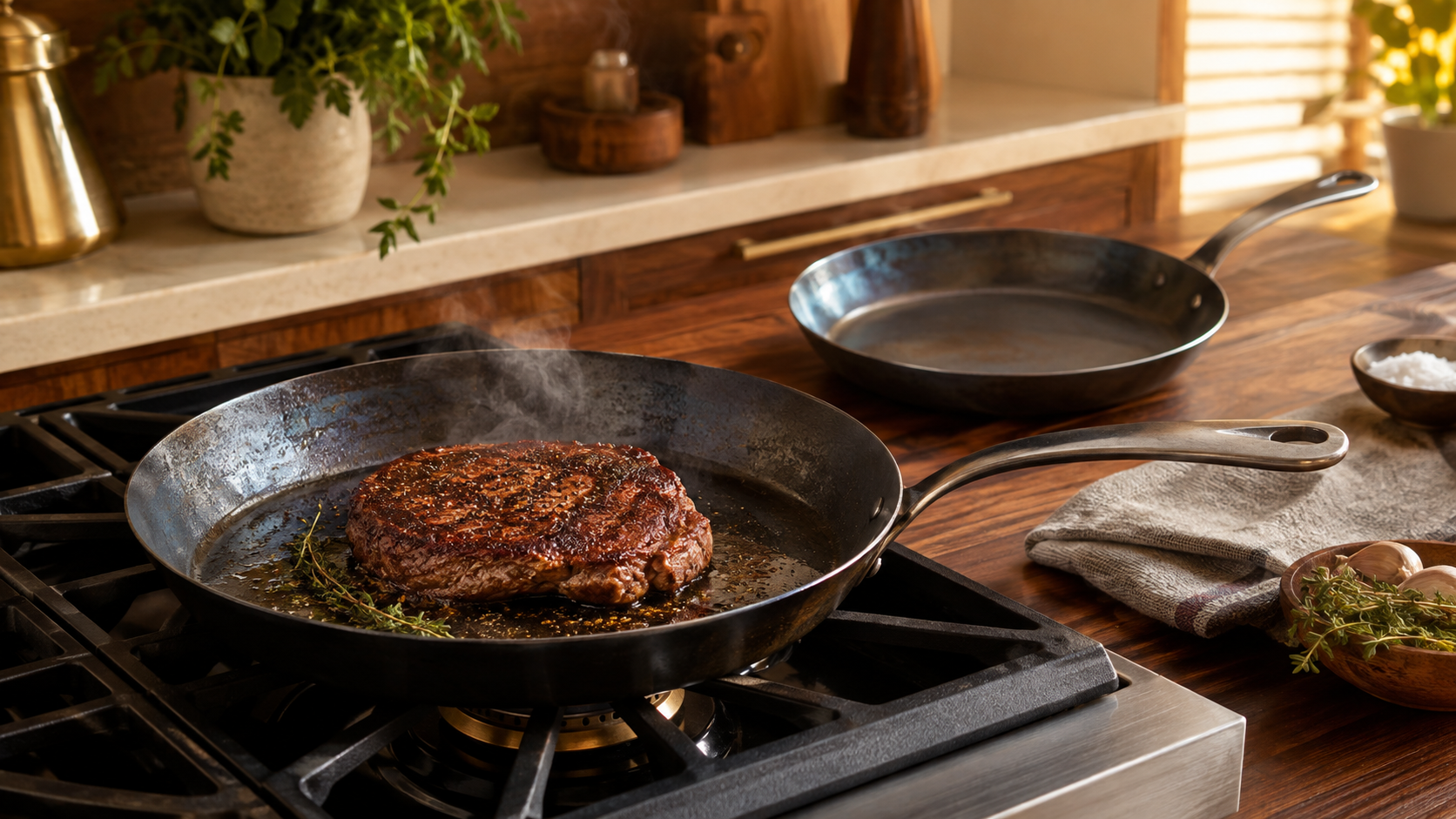
Best Carbon Steel Pans: Buy the Cooking Surface, Not the Rim
The best carbon steel pans for everyday cooking, the oven, lighter hands, and live fire, compared by flat cooking surface, weight, handle, and first-use effort.
Read the field guide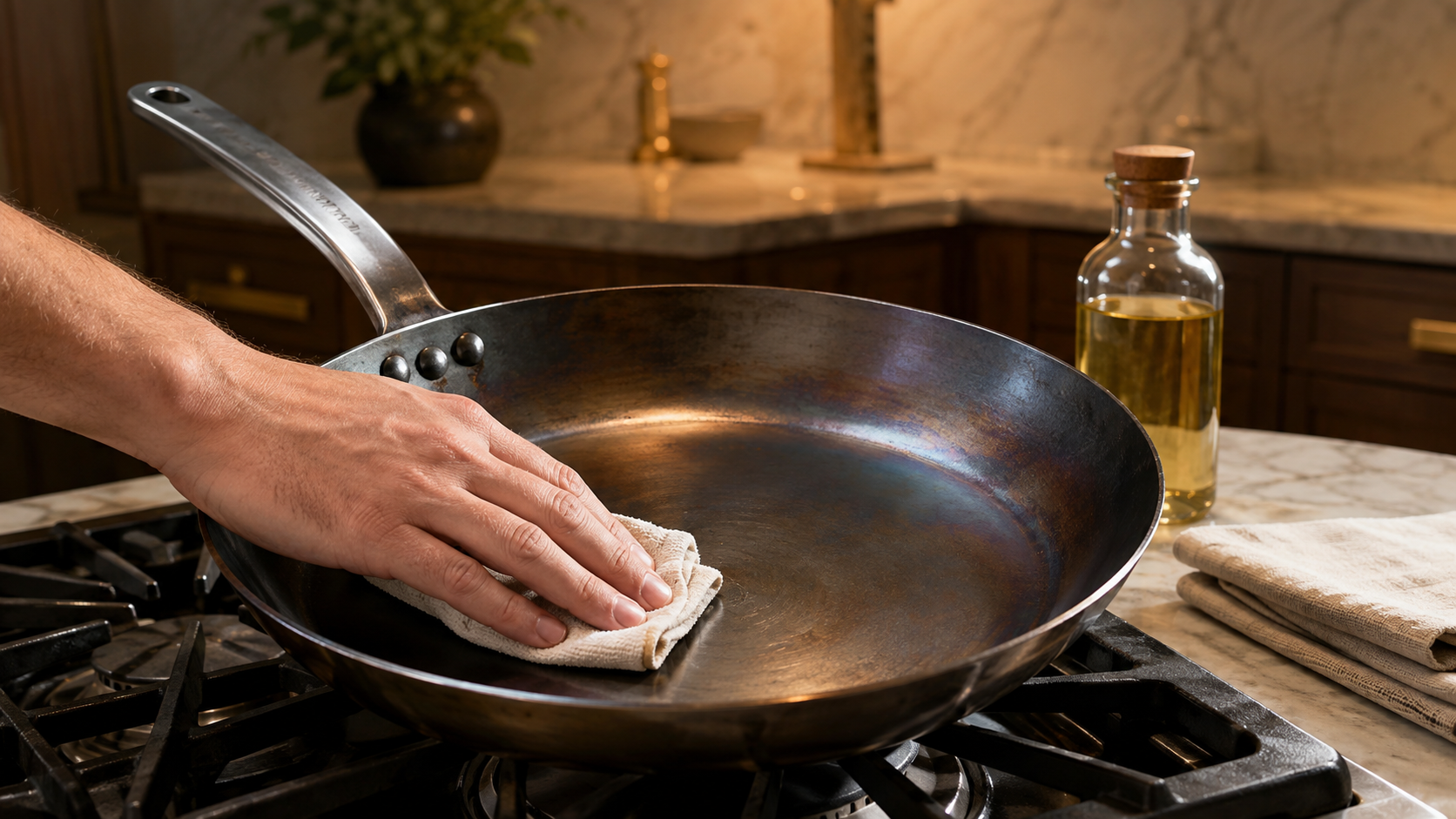
How to Season a Carbon Steel Pan (Your Pan's Maker Knows Best)
Season a carbon steel pan without sticky buildup: the right oil, stovetop and oven methods, maker-specific temperatures, and the daily care that keeps it slick.
Read the field guide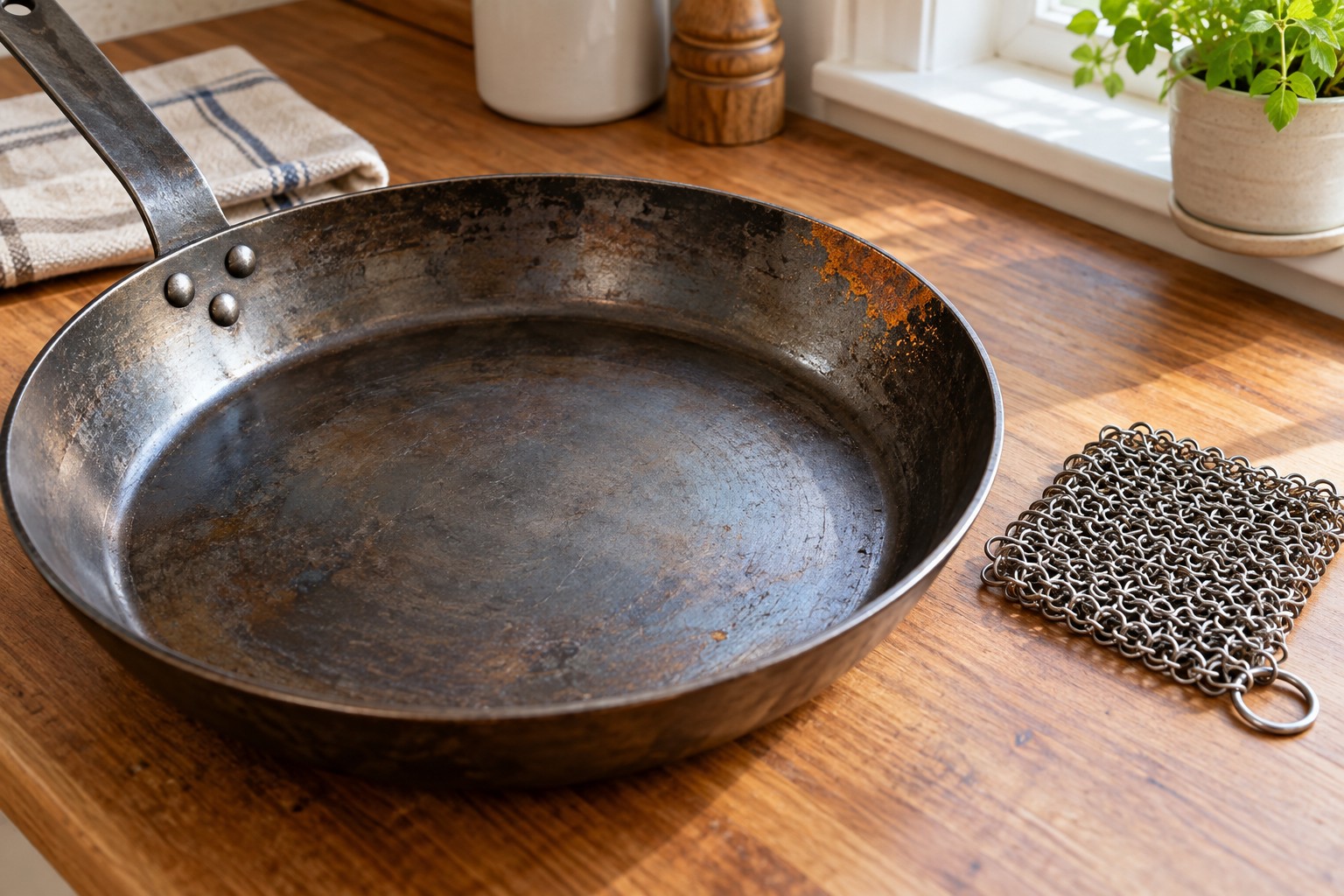
Carbon Steel Pan Rust: Why It Happens, How to Fix & Prevent (2026)
Why carbon steel pans rust, how to remove surface rust and when to re-season. Prevent repeat rust, then troubleshoot sticky or flaking seasoning.
Read the field guide