
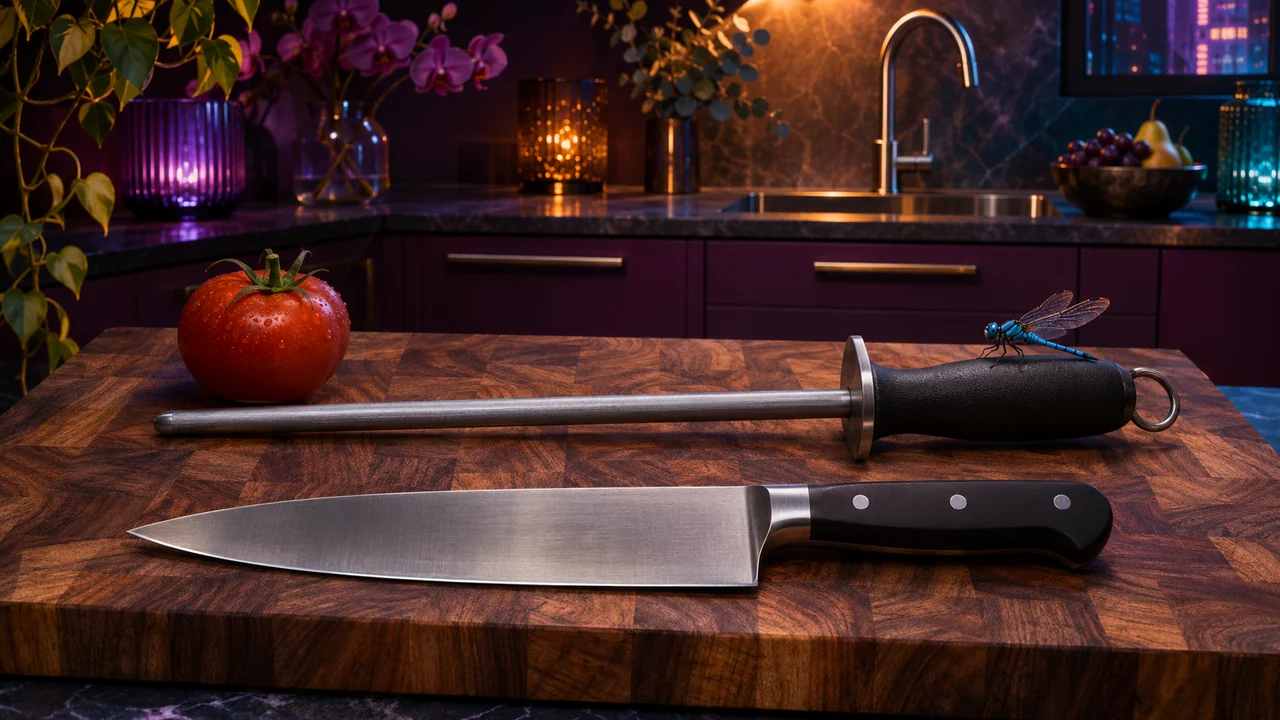
The knife skips across a tomato skin instead of slicing through. By the time it gets through, half the juice is on the board and you have produced a crushed tomato instead of the thin slices the recipe called for.
The verdict up front. For a straight-edge knife whose maker allows honing, start with a few light strokes on a suitable rod (lock in). Try the tomato again. If the blade still struggles, sharpen it at its factory angle. I’d send serrated and Cutco Double-D edges out.
Honing vs sharpening
Honing can straighten a rolled edge. Sharpening removes enough metal to form a fresh one. America’s Test Kitchen found that even smooth rods can take off some metal, so use a light touch. Messermeister suggests a tomato test after honing. If the knife still needs pressure to get through the skin, it’s time to sharpen.
How often to hone a kitchen knife
I use a honing steel before I cook, then wipe the blade on a towel. Knifewear suggests a light touch-up once or twice a week for most home cooks.
Set the rod tip on a folded towel on your cutting board. Follow your knife maker’s angle and make a few light strokes from heel to tip, alternating sides.
- A honing steel such as the Utopia Kitchen Honing Rod suits many Western stainless knives. Start with the rod you already own if it’s compatible.
- For harder Japanese blades, Chef Knives To Go and Knifewear favor fine ceramic. Check your knife maker’s guidance first, especially if the blade is thin or has an unusual bevel.
Sharpen once the rod stops helping
Shun puts many home cooks at about once a year. I use a three-stage electric sharpener about twice a year and a simple handheld about monthly on the knives I use most. Let the tomato tell you when it’s time. Match the sharpener to the factory angle before buying.
| Tool | Where it fits | What to weigh |
|---|---|---|
| AccuSharp Gourmet Series 15 Degree | Quick touch-ups for everyday 15-degree blades | America’s Test Kitchen found the edge rougher than with its top manual pick. |
| Chef’sChoice 15XV | Electric sharpening for 15-degree knives | America’s Test Kitchen’s top pick in that class left faint cosmetic scratches. |
| Shapton Kuromaku 320/1000/5000 Set | Whetstones for holding the knife’s original angle by hand | There’s a learning curve. Shapton recommends its 1000 and 5000 grits for ordinary household knives. |
When to send out a serrated or Double-D knife
I leave both edges to a pro. Made In describes sharpening a conventional serrated blade with a tapered rod, one scallop at a time. Cutco directs Double-D owners to its service instead of its home pull-through. The company covers sharpening for home users up to 40 items per request, with shipping to Cutco and a return fee.
I used to sell Cutco. My understanding is that each Double-D groove has its own cutting edge, so I think of it as a hybrid that can saw or push-cut. The Rational Kitchen, which bought and tested a Double-D blade, describes its action as serrated and more prone to tearing. Prudent Reviews treats both edges as functionally similar. For a dull Double-D, I’d box it up.
Who should skip buying a sharpener
If your knife slices cleanly after a light hone, keep the rod and save the drawer space.
Cited sources
- America’s Test Kitchen honing rod tests
- America’s Test Kitchen manual sharpener tests
- America’s Test Kitchen electric sharpener tests
- Shun on sharpening and honing
- Messermeister on how often to sharpen and hone
- Knifewear ceramic honing rod instructions
- Chef Knives To Go on rod selection
- Shapton stone grit FAQ
- Made In on sharpening a serrated knife
- Cutco at-home sharpening instructions
- Cutco sharpening service
- Cutco Forever Guarantee
- The Rational Kitchen’s Cutco review
- Prudent Reviews’ Cutco review
More field guides
More Precision Chef guides
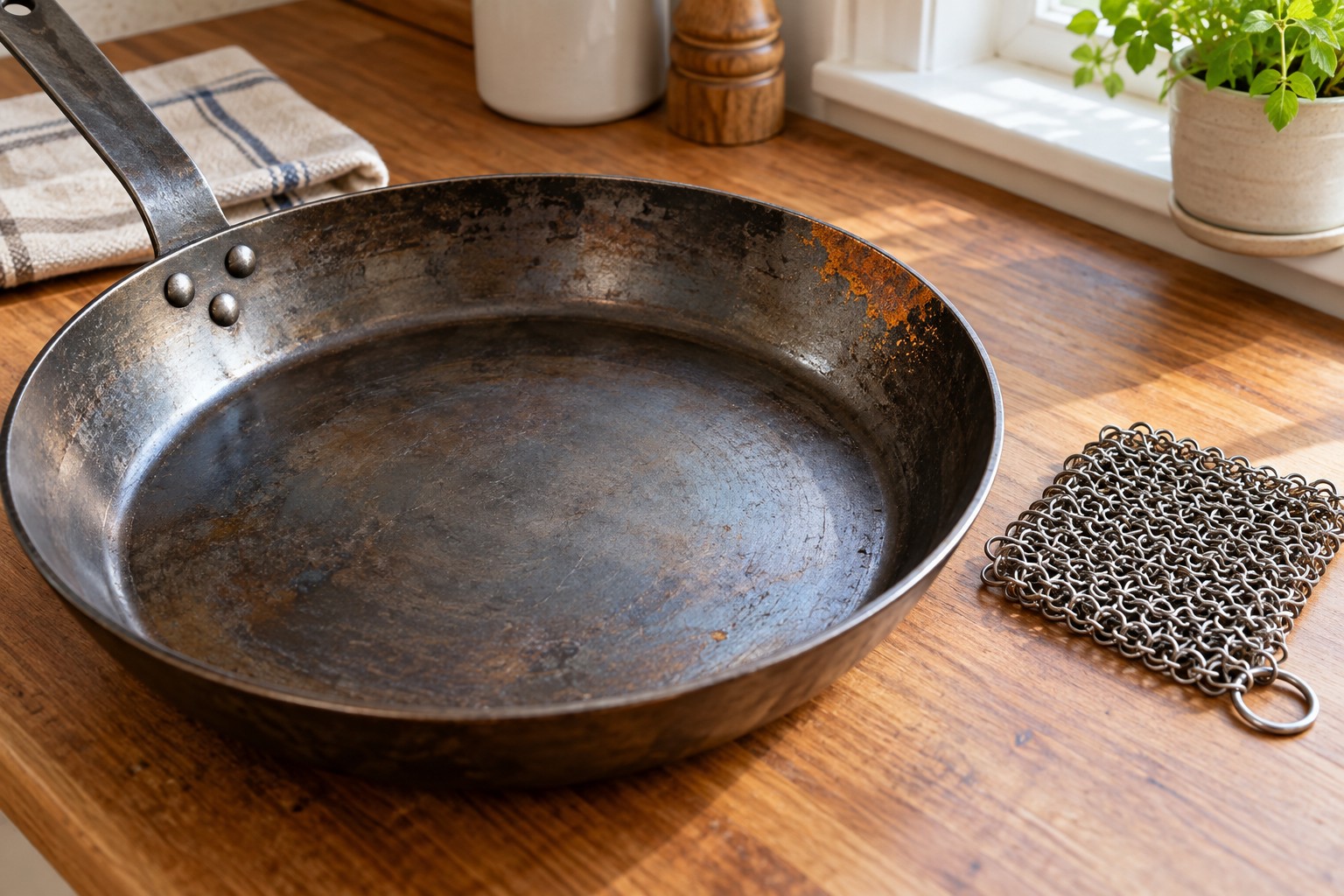
Carbon Steel Pan Rust: Why It Happens, How to Fix & Prevent (2026)
Why carbon steel pans rust, how to remove surface rust and when to re-season. Prevent repeat rust, then troubleshoot sticky or flaking seasoning.
Read the field guide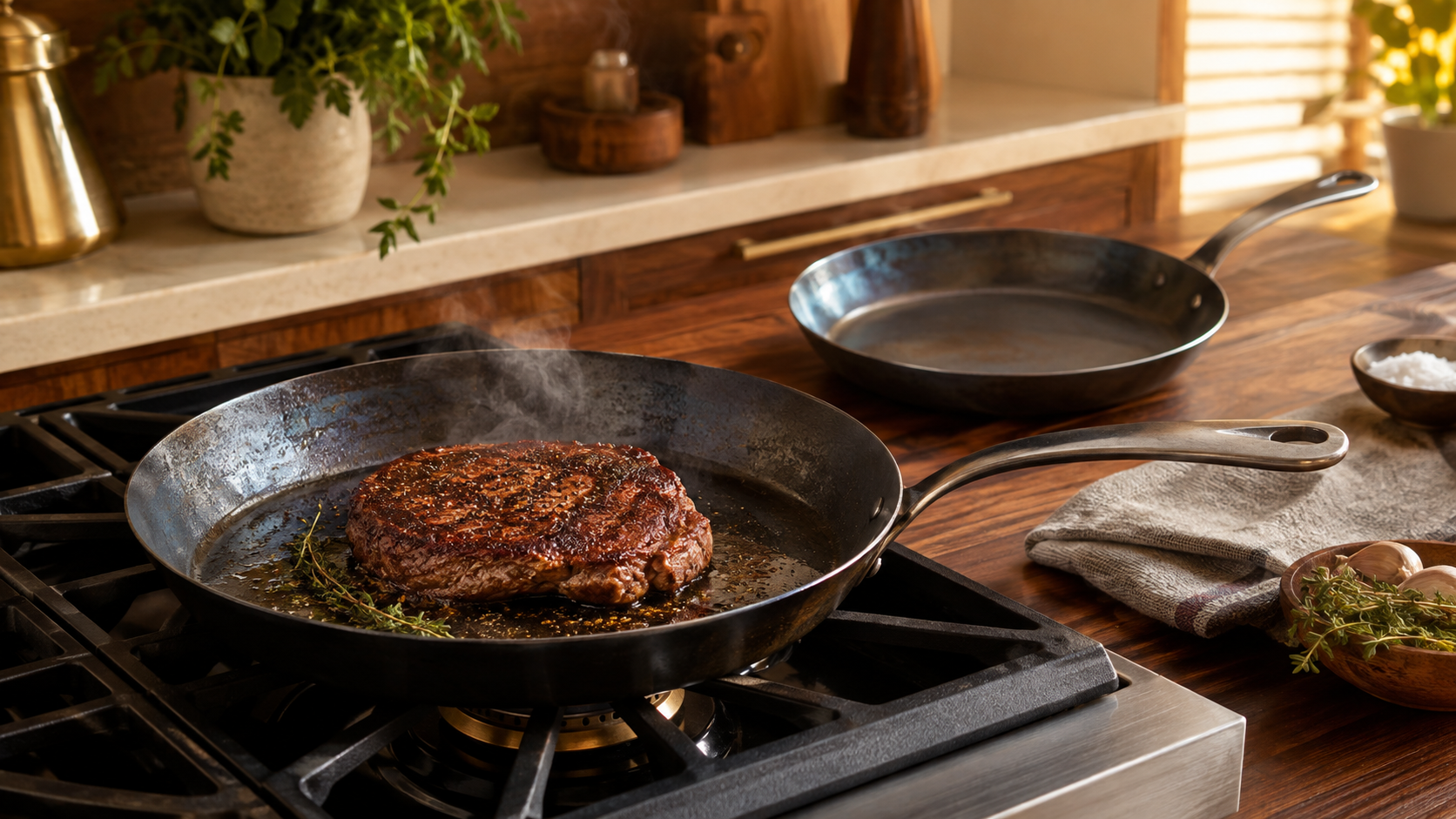
Best Carbon Steel Pans: Buy the Cooking Surface, Not the Rim
The best carbon steel pans for everyday cooking, the oven, lighter hands, and live fire, compared by flat cooking surface, weight, handle, and first-use effort.
Read the field guide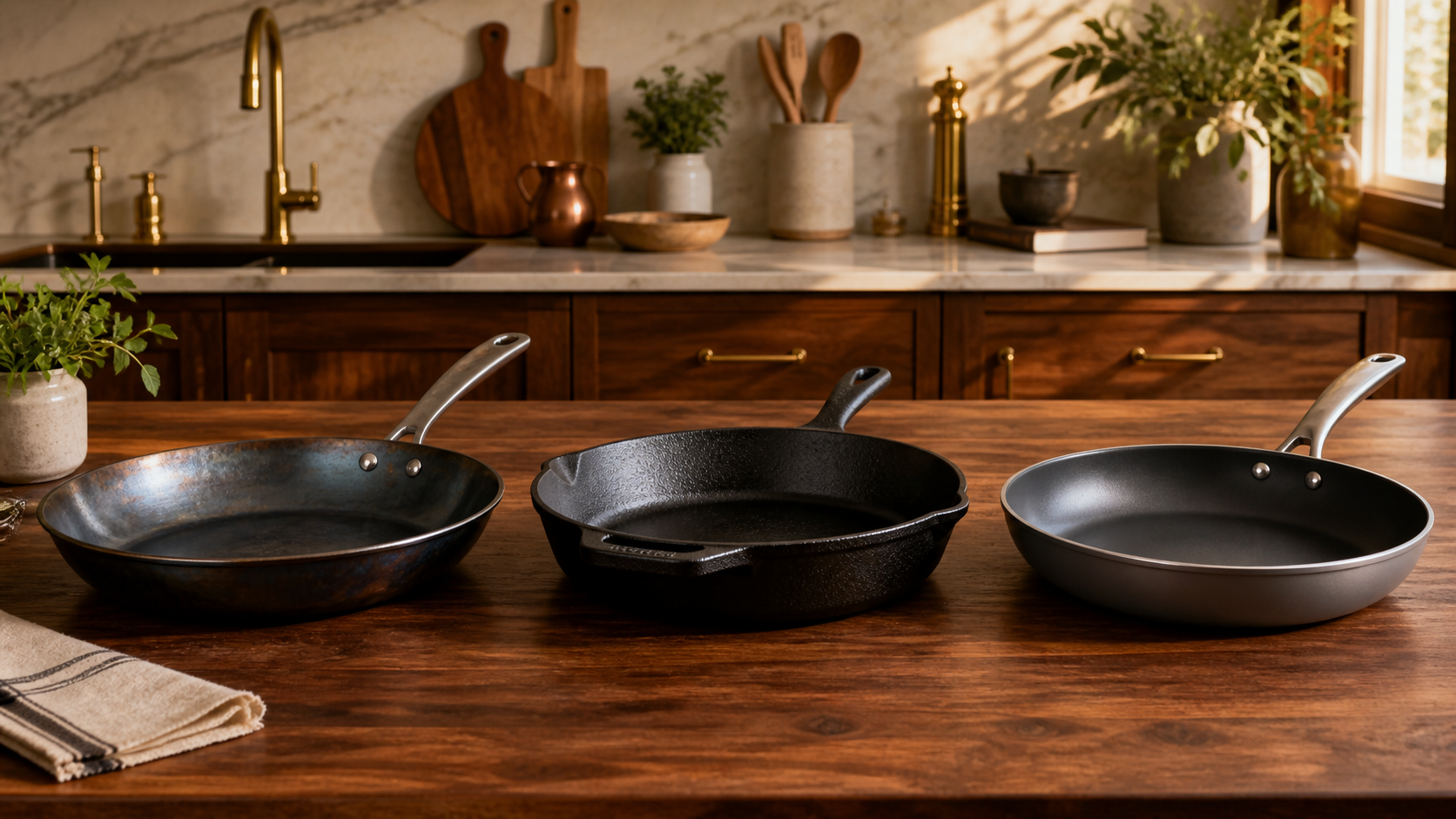
Carbon Steel vs Cast Iron vs Nonstick: Which Pan Is Best?
Compare carbon steel, cast iron, and nonstick by weight, heat, upkeep, and lifespan, then choose the pan that fits how you actually cook.
Read the field guide