
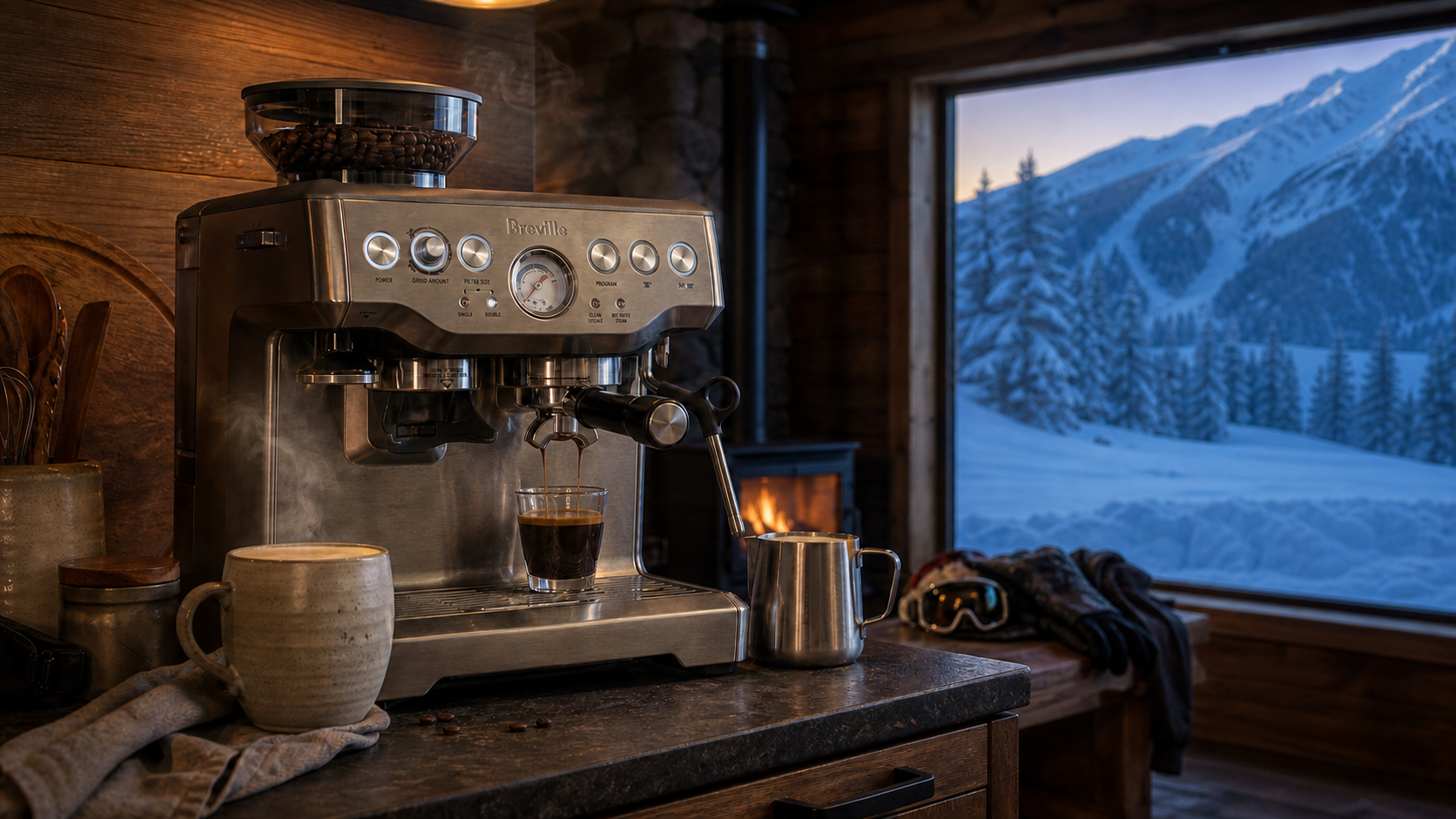
The built-in grinder and steam wand is what brought espresso, lattes and mochas into my kitchen. After nearly 4 years with the Barista Express BES870XL, the less glamorous part of ownership is what goes into its water tank.
My verdict: the Breville Barista Express BES870XL earns its place if you make espresso or milk drinks regularly and enjoy a hands-on routine. Once dialed in, mine has stayed consistent. It still asks you to grind, tamp, steam and clean. In my hard-water area, descaling is the chore I would most like to hand back.
The grinder is the reason to choose it
The built-in conical burr grinder has 16 grind settings and lets you adjust the dose. It grinds into a 54mm portafilter, the handled basket that holds the coffee. I can make the drinks I normally bought with the everyday setup in one place.
You still choose the grind and learn to steam milk. Fresh beans can need an adjustment. The built-in grinder keeps the tools together, but you are making the drink rather than selecting it from a screen.
A separate grinder makes sense if you want to choose and upgrade it on its own. If you already have one you like, check whether you need another built into the machine. I own both: the separate grinder handles larger batches for group camping trips; the built-in one handles daily drinks.
Water changes the ownership experience
My unit has needed no repairs during nearly 4 years of regular cleaning. That is my experience, not a promise about the next machine. High local mineral content has meant more descaling than I would like.
Breville’s BES870 manual recommends cold, filtered water. It advises against distilled or demineralized water. Replace the tank filter every 2 months, more often in hard water. The manual also says to remove that filter when using filtered or bottled water. Follow its advice for your water supply; filtering does not cancel the need for care.
Cleaning and descaling are separate jobs. In this manual, a flashing CLEAN / DESCALE light calls for the cleaning cycle; a steady light calls for descaling. The cleaning cycle addresses coffee residue. Descaling addresses mineral buildup. Neither replaces cleaning the steam wand after milk drinks.
That distinction matters on an ordinary morning. An espresso machine can be easy to use once you know it and still demand attention when you would rather just drink the coffee.
The pump number tells you little about the cup
Breville lists a 15-bar pump alongside low-pressure pre-infusion and 9-bar extraction. The larger number is not a target to chase on the gauge. Grind, dose and the way the shot flows are more useful things to watch.
The machine also uses PID control to regulate brewing temperature. That helps control the shot, but you still need fresh beans and a suitable grind.
Best Buy’s owner reviews include praise for drink quality alongside complaints about noise, steam-wand problems and cleaning. Those reports show possible problems to watch for. They do not show how common a fault is. Another owner’s water and cleaning routine may differ from yours.
Who should skip it
Skip the Barista Express if you want coffee from a button with little cleanup. For a milk drink, you grind, tamp, steam and empty the coffee basket. Those steps can be satisfying. They can also be the reason an impressive machine sits unused.
Before buying, picture making the drink and cleaning up before your day starts. Then decide how you will handle the water and descaling. Buy it if that is a morning you want to repeat.
Cited sources
- Breville Barista Express specifications
- Breville BES870 US instruction manual, water and care sections
- Best Buy BES870XL owner reviews
More field guides
More Precision Chef guides

Foamy Espresso Shot? What the Foam Is Telling You
A foamy espresso can taste great. If yours tastes sharp, use the roast date, basket type and shot flow to work out what to change first.
Read the field guide
Dry Turkey After Brining? Check the Thermometer, the Probe and the Pull Point First
Brined your turkey and it still came out dry? Check your thermometer, probe placement, oven and pull point before you blame the brine.
Read the field guide
Is Your Oven Lying? How to Check It Before Thanksgiving
Check your oven temperature before Thanksgiving. Learn how long to wait, spot a persistent offset and decide whether to recalibrate.
Read the field guide