
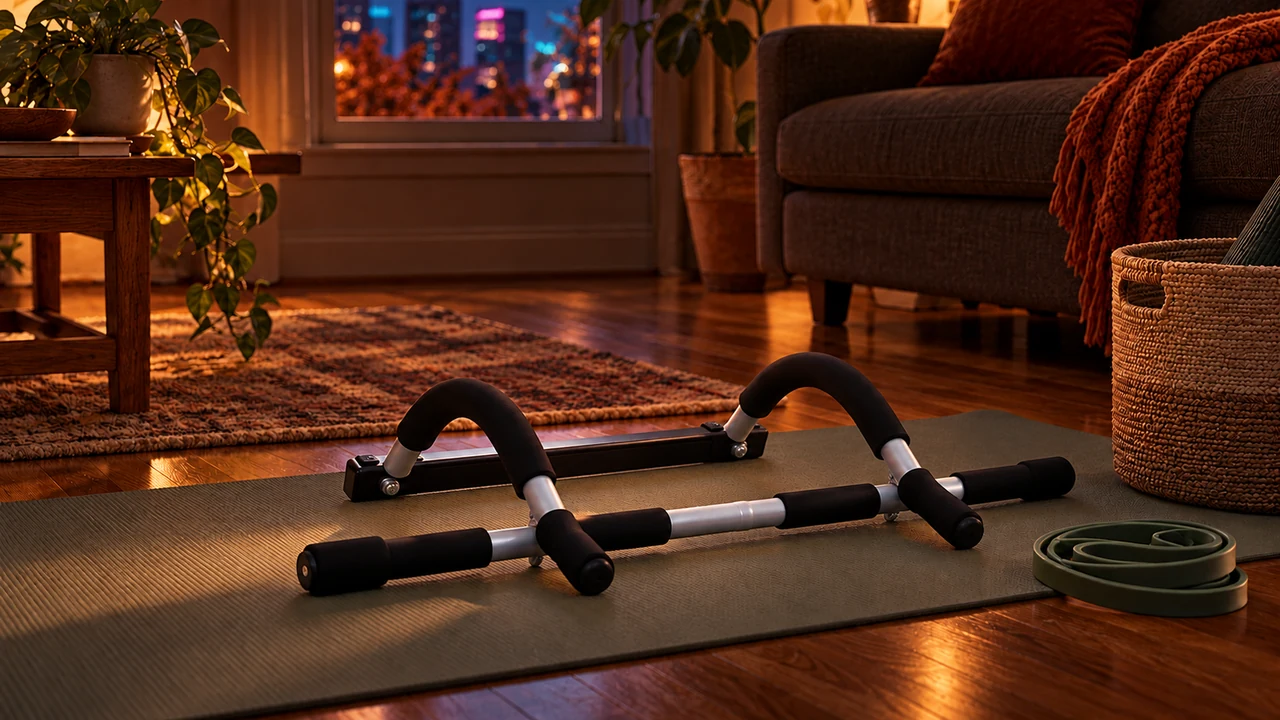
My boxing speed bag made the move. It never found a wall in the new place. Now it gathers dust in storage, a portable piece of equipment with nowhere to go. Getting it through the door was the easy part.
Verdict: start with handled bands and a pull-up bar if your doorway meets its installation requirements. Add floor protection that rolls up or unclips. Buy for the next apartment too; anything that needs a particular wall has already narrowed your options.
What will it need in the next apartment?
Before shopping, decide where and how you’ll train, and where the equipment goes afterward. If the bands live in a drawer and the mat rolls behind the sofa, the room can still be your living room by dinner.
Use the heaviest piece as a moving-day test. If it needs a friend and a dolly, make sure you have both. Then ask what it needs at the other end: wall space, suitable trim, storage. My speed bag passed the transport test and failed the next-home test.
The doorway bar: no screws isn’t no marks
The Iron Gym listing describes a leverage-mounted bar that braces against the doorway without screws. That doesn’t make the contact points harmless. I’ve had a doorway bar mark and indent a door. Surface marks usually scrubbed out with a washcloth. An indentation is another matter.
Measure the opening and trim profile against the exact model’s instructions before buying. The listing contradicts itself on doorway width, so don’t choose whichever number suits your door. Confirm the fit and required hardware first. Hardwood alone doesn’t prove suitability, and improvised padding can change how the bar sits.
My own compromise is a bar that lifts out of metal brackets screwed into the frame. I didn’t ask the landlord; I patched the holes with drywall plaster and paint when I left. That’s personal history, not permission for your rental. Read your lease and ask before making alterations.
Bands do most of the work
In hotel rooms I do pushups, mountain climbers and band work. Handled bands cover back and arms, a smaller band covers shoulder exercises, and a loop band handles a glute routine I do for skiing. That’s enough to get a session done without furnishing the room.
For door-anchored work, check the anchor’s instructions and the door’s suitability first. Fitness Volt specifies a solid, fully closed door. The TRX GO suspension trainer is another portable option and includes indoor and outdoor anchors. It uses bodyweight rather than elastic resistance; don’t assume your band anchor works for both.
Protect the floor, then the people below
Use a mat or pads for cushioning and to help protect the finish. For a dedicated corner, SUPERJARE tiles combine an EVA-foam base with a rubber top and unclip for storage. Check that any mat suits your floor finish. Neither a yoga mat nor thicker tiles establish what the floor can carry.
Nobody has complained about my workouts, though I doubt the rooms below enjoy every movement. That isn’t a sound test. Keep reasonable hours and cut the loudest exercises; don’t treat a cushioned floor as permission to drop weights.
Who should skip this approach
If you want a bench and heavier adjustable weights, use the small-space home gym guide. A competitive barbell total needs a different plan. If your doorway fails the fit check, skip the bar and start with the bodyweight movements you can already do.
And before buying a walking pad, try walking outside. If safety, weather or your work schedule keeps you in, consider the walking pad guide. Your first workout doesn’t need to wait for a delivery.
Cited sources
- Fitness Volt, renter-friendly home gym ideas: https://fitnessvolt.com/renter-friendly-home-gym-ideas/
More field guides
More Compact Home Fitness guides
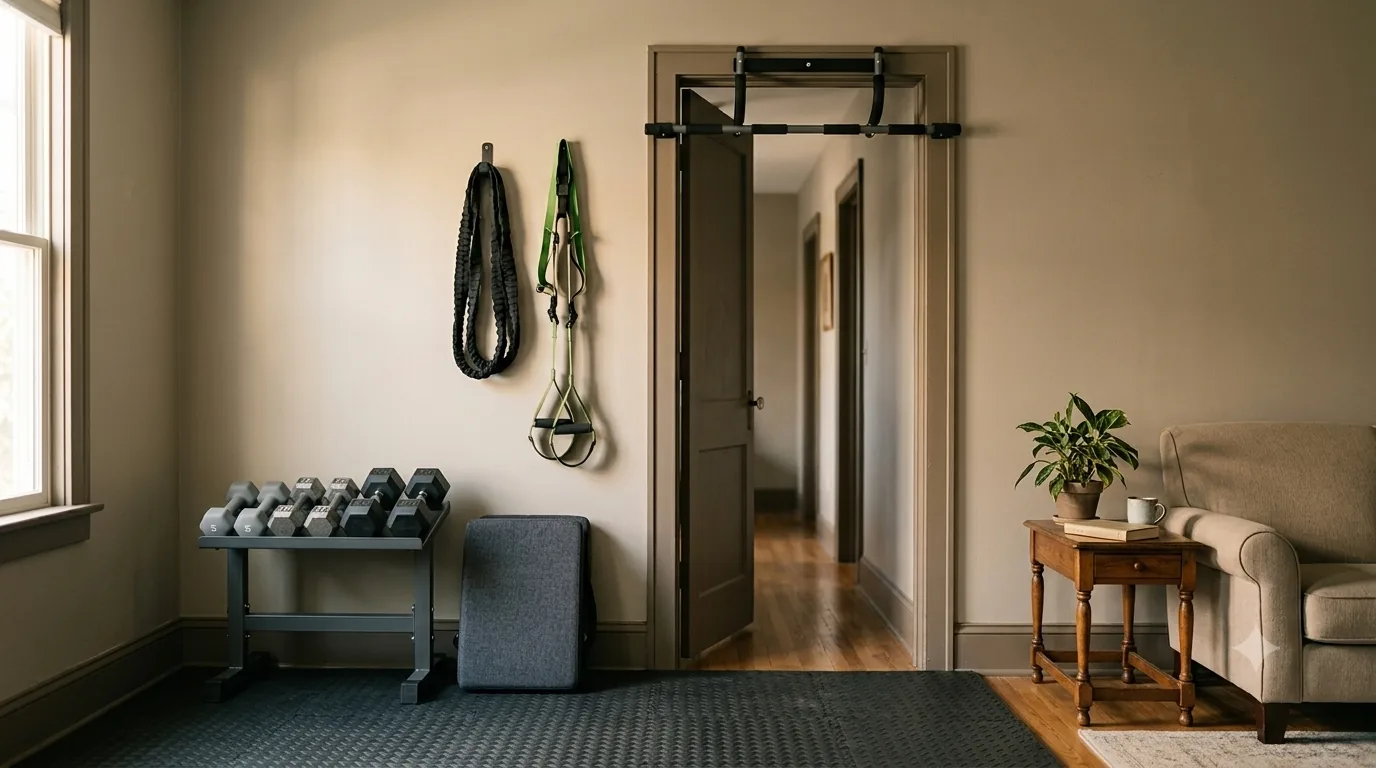
Small-Space Home Gym Setup: A Real Strength Gym Under 50 Square Feet
Plan a small-space home gym around adjustable dumbbells, a folding bench and a doorway bar, with room to move and practical floor and noise checks.
Read the field guide
NÜOBELL vs PowerBlock for Apartments: Which Is Quieter?
Compare NÜOBELL 580 and PowerBlock Elite EXP adjustable dumbbells for apartment workouts: in-hand rattle, floor noise, wear points, and weight changes.
Read the field guide