
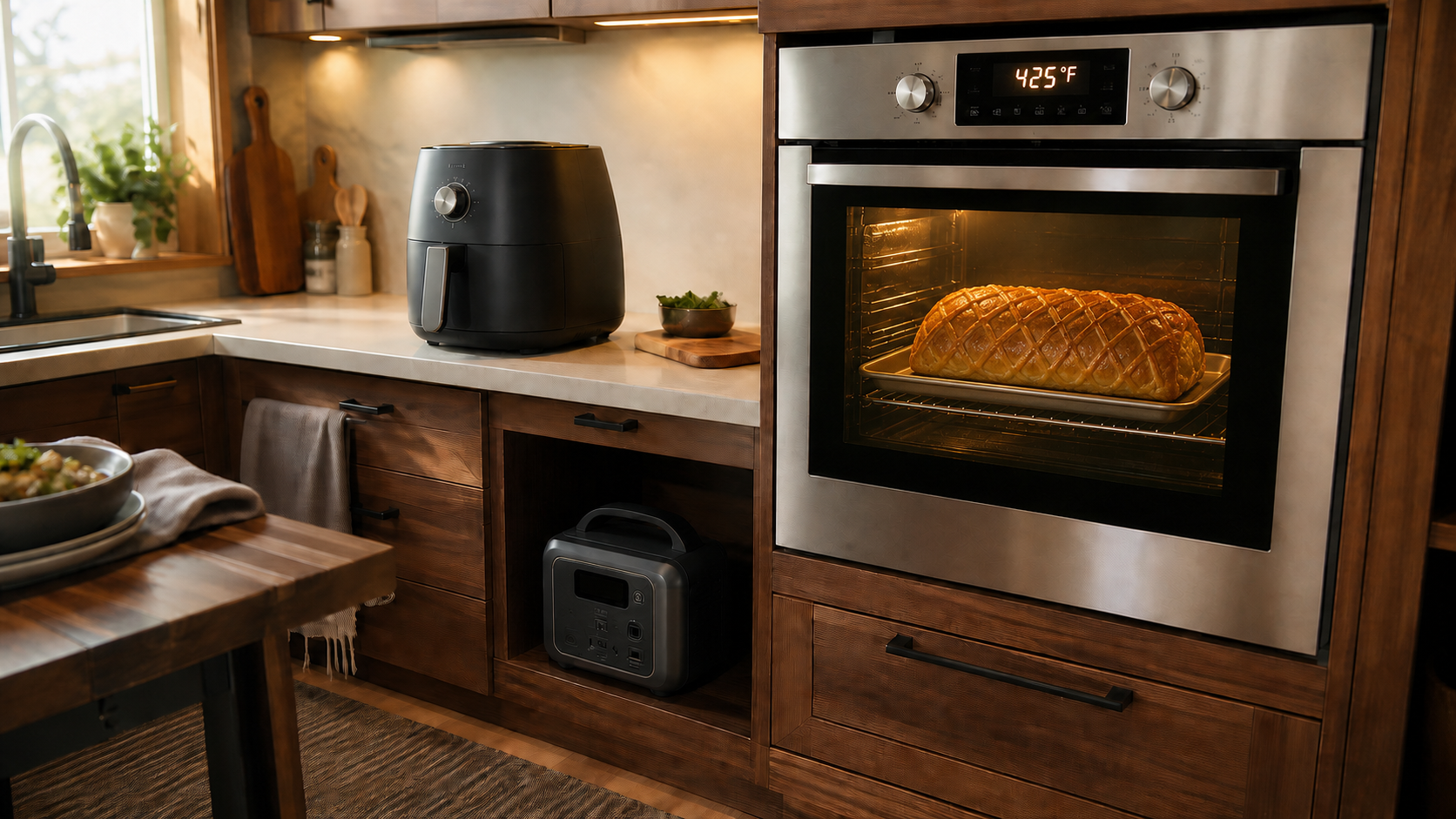
An air fryer can finish a tray of potatoes before your oven finishes preheating. Then dinner needs a second tray. The useful question is no longer which appliance uses less energy for one portion, but how many cooking cycles the whole meal takes.
The verdict up front: an air fryer generally uses less electricity for 1 small load. If your meal needs repeated baskets and fits in 1 oven session, the oven can catch up. There is no universal batch crossover.
1. What the lab actually measured
Which? cooked a chicken, chips, a potato and a cake in an air fryer and a built-in electric oven, preheat included. The air fryer used 0.22 to 0.54 kWh per dish. The oven used 0.71 to 1.16 kWh. It used less than half the energy for each dish. The cake comparison is less direct because the air fryer cake was smaller.
The U.S. residential average was 18.31 cents per kilowatt-hour in July 2026 (EIA, preliminary). At that rate, those measured air fryer runs would cost roughly 4 to 10 cents in electricity; the oven runs, roughly 13 to 21 cents. Your utility rate is the useful number for your kitchen.
2. Your air fryer’s label overstates the bill
Nameplate math is simple:
watts ÷ 1,000 × hours = kilowatt-hours
kilowatt-hours × electricity rate = cooking cost
By that formula, a 1,725W Cosori TurboBlaze running at full rated power for 25 minutes would use 0.72 kWh, about 13 cents at the EIA rate. RTINGS measured its maximum draw at 1,510W. Heating elements also cycle, so rated watts multiplied by total cooking time is an estimate, not a meter reading. The same caution applies when estimating energy use for a 1,500W Ninja Crispi FN101.
3. The second basket changes the comparison
The number of plates tells you little. A wide basket may hold 4 salmon fillets in 1 layer but only enough uncrowded potatoes for 2 people. For specific models, see our compact air fryer picks for small kitchens.
Which? measured 1 quantity of each food in each appliance. Doubling its air fryer result does not tell us how much energy an oven needs for twice the food. But another basket adds energy while an oven may cook the full meal after 1 preheat. Consumer NZ found ovens can be cheaper for large quantities and longer cooks.
If you regularly cook 2 or 3 baskets, check whether that meal fits in 1 oven session. The one-portion lab figures cannot answer that for you.
Gas ovens need different math because gas is often billed in therms. Use both utility rates rather than the electric formula alone.
4. Can a portable power station run an air fryer?
In a camper van or off-grid kitchen, inverter output matters before cost. A 1,500W air fryer running 20 minutes can draw up to 500Wh at the outlet. At 85% inverter efficiency, the battery supplies about 590Wh.
Check continuous AC output rather than surge, plus usable watt-hours and anything else sharing the circuit. At 120V, an 1,800W air fryer already draws 15A.
Who should skip the air fryer
It is a hard sell if you already batch cook in a full oven, or cook only a few times a month. A few cents per meal is a thin reason to give up counter space. If most dinners need 3 baskets, start with the oven you own.
If the small chamber solves a real weeknight problem, compare the Best Air Fryers for Small Kitchens guide next. Count your usual loads before you count quarts.
Cited sources
- U.S. Energy Information Administration: July 2026 residential electricity price, Table ES1.A
- Which?: air fryer vs oven energy tests
- Consumer NZ: air fryer vs oven
- RTINGS: Cosori TurboBlaze test
- SharkNinja: Ninja Crispi FN101 specifications
- Cosori: TurboBlaze specifications
More field guides
More Precision Chef guides
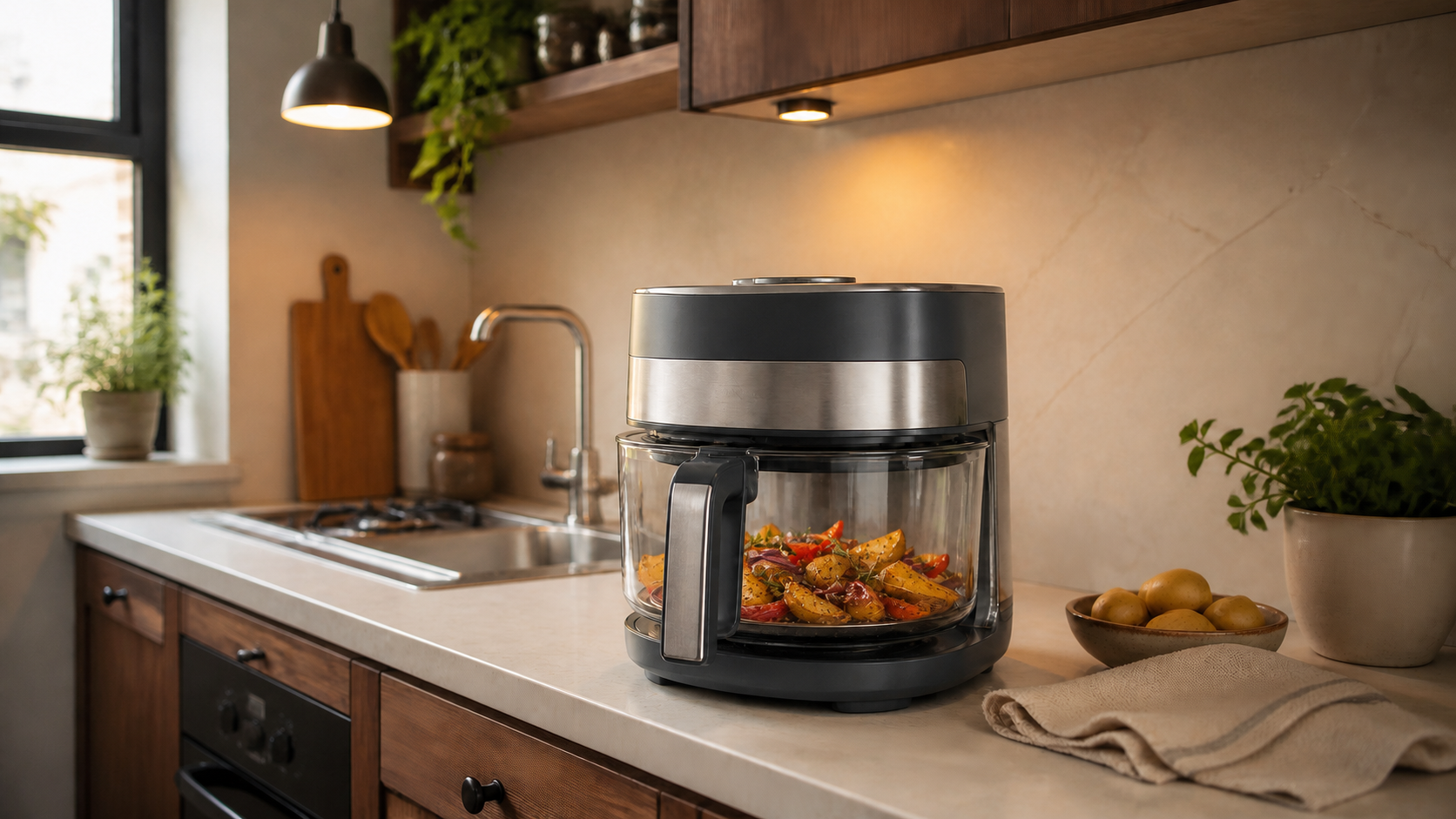
Best Air Fryers for Small Kitchens & Apartments 2026: 3 Compact Picks
Compare 3 air fryers for small kitchens and apartments by counter footprint, cooking space, storage and food-contact surfaces, with clear trade-offs.
Read the field guide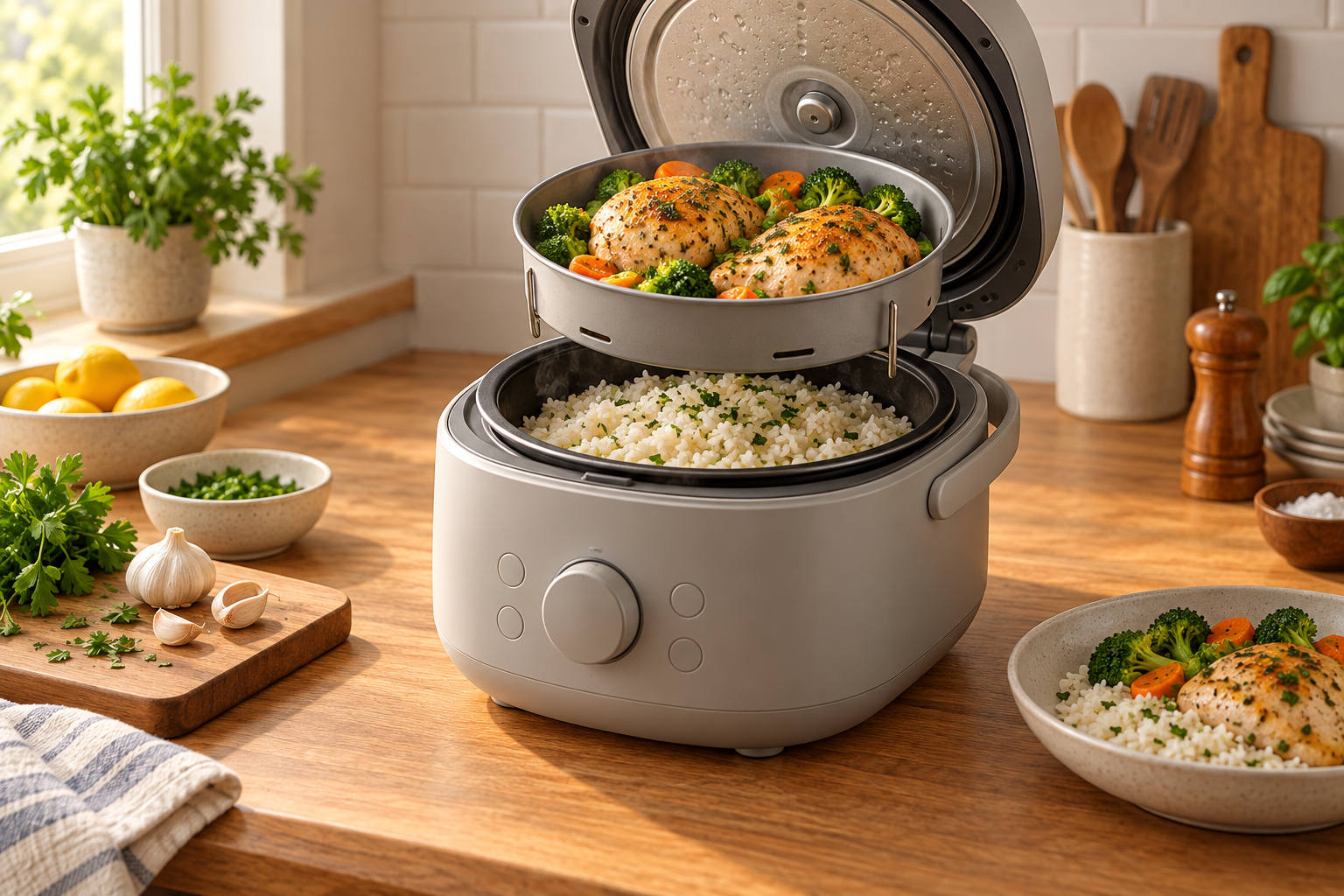
Ninja Speedi SF301 Review: Keep Yours or Buy One?
Own a Ninja Speedi SF301 or thinking of buying one? Check stock, tray capacity, real meal times and cleanup before deciding.
Read the field guide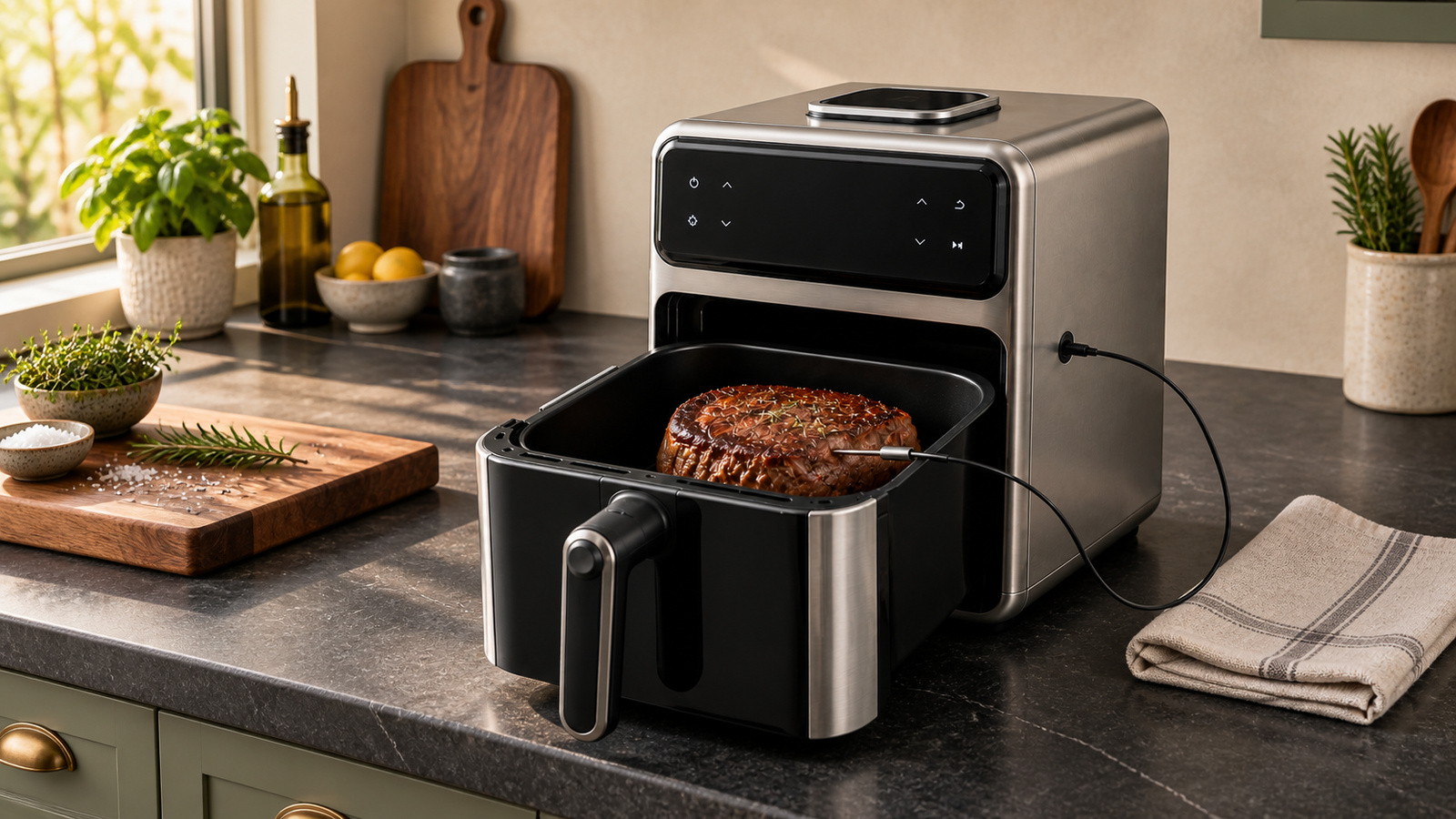
Dreo ChefMaker Review: Buy It for the Thick Cuts
The Dreo ChefMaker suits thick steaks, fish and chicken. Check its 1-inch probe guidance, cooking time and connector care before buying.
Read the field guide